



Uncategorized

Blog

News

Contact US

If you are interested in cooperation, please contact us immediately, we will give you feedback as soon as possible!

What Is a Transformer? Transformer Models and Fundamentals

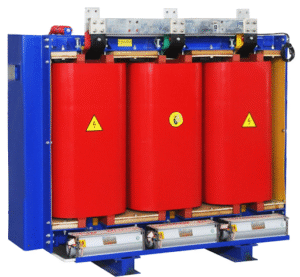
A transformer is a device used to convert AC voltage, current, and impedance. It operates based on the principle of electromagnetic induction and is a static electrical apparatus. Transformers come in many types, including pulse transformers, intermediate-frequency transformers, trigger transformers, shielding transformers, and more. Table of Contents Definition of a Transformer A transformer transfers electrical energy or signals from one circuit to another using the principle of electromagnetic induction. It is an essential component for electrical power conversion or signal transmission. A transformer consists of: Core (iron or magnetic core) Windings (two or more) The winding connected to the power supply is the primary winding, and the others are secondary windings. Working Principle of a Transformer A simple single-phase transformer consists of two conductive windings. When alternating current or pulsed DC flows through one winding, it generates a varying magnetic field, which induces a voltage in the second winding according to the principle of mutual induction. The voltage ratio between primary and secondary windings is proportional to their turns ratio: VsVp=NsNpfrac{V_s}{V_p} = frac{N_s}{N_p}Vp Vs =Np Ns Similarly, the current ratio is inversely proportional to the turns ratio. While transformers can step up or step down voltage, they do not amplify
Read More »

Ultimate Knowledge Guide to Dry-Type Transformers | Complete Overview & Technical Insights

With the rapid development of the global economy, dry-type transformers have experienced significant growth worldwide. In the field of distribution transformers in particular, the market share of dry-type units has been increasing year by year. In many countries, dry-type transformers now account for 40–50% of all distribution transformers. Table of Contents Structural Features of Dry-Type Transformers Safe, fire-resistant, and environmentally friendly, allowing installation and operation directly at load centers. Manufactured with advanced domestic technology, offering high mechanical strength, strong short-circuit resistance, low partial discharge, excellent thermal stability, high reliability, and long service life. Low loss, low noise, and significant energy-saving performance, with no need for maintenance. Excellent heat dissipation and strong overload capacity; capacity can be increased under forced-air cooling conditions. Superior moisture resistance, suitable for high-humidity or harsh environmental conditions. Can be equipped with a comprehensive temperature monitoring and protection system. The intelligent temperature control unit automatically detects and cyclically displays the operating temperature of each phase winding, and can automatically start/stop cooling fans while providing alarm and trip functions. Compact size, lightweight design, minimal footprint, and low installation cost. Structural Designs Open TypeA common structure where the transformer body is in direct contact with the atmosphere. Suitable for

Read More »

Some basic knowledge about transformers that you should know.

Transformers are responsible for the efficient transmission and conversion of electrical energy, regulating voltage and minimizing power loss. Therefore, transformer design plays a critical role in ensuring system reliability and operational safety.This article provides a comprehensive explanation of transformer fundamentals — including basic structure, classifications, functions, selection criteria, design procedures, and typical applications. Table of Contents 1. What types of power transformers are there, and what are their main components? There are several types of power transformers, such as dry-type transformers, oil-immersed transformers, and pad-mounted distribution transformers.Their main components typically include: the core, windings, insulation system, tank (for oil-immersed types), cooling system, tap changer, bushings, and other protective accessories. 2.What Is Magnetizing Current (Excitation Current)? Magnetizing current is the excitation current needed to build magnetic flux inside the core.When a transformer is energized, a high inrush current may occur.If the residual flux has the same polarity as the applied voltage, the total flux can exceed core saturation, causing a surge up to 6–8 times the rated current.This transient current contains DC components and harmonics and decays over time, typically 5–10 seconds for large transformers and ~0.2 seconds for smaller units. 3.Why should a new transformer or an overhauled transformer receive

Read More »

How to Choose a Transformer

Choosing the right transformer is essential to ensure the safety, efficiency, and long-term reliability of your power system. The selection process should begin with the following considerations: Determine the load requirements – Specify the electrical kVA rating and voltage requirements, then confirm the number of phases (single-phase or three-phase) and the operating frequency (Hz). Consider the application and environment – Assess the intended use of the transformer, its installation conditions, and whether a specialized cooling system is needed. Select a qualified supplier – Compare the transformer’s nameplate data with these factors to ensure it meets your technical and operational requirements. Table of Contents Selecting the appropriate transformer is critical to safeguarding the safety, efficiency, and long-term reliability of your power system. Below is a comprehensive, easy-to-follow guide to help you make an optimal choice. 1. Clarify Your Electrical Requirements The first step in choosing a suitable transformer is to clearly define your load characteristics and operating parameters—these form the backbone of the selection process: · Determine the required kVA rating and voltage specifications based on your load demands. · Specify the number of phases: opt for single-phase or three-phase, depending on your application. · Confirm the frequency (50 Hz or

Read More »

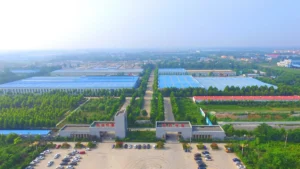
Liaocheng Kete New Energy Co., Ltd. the benchmark of the transformer industry

Liaocheng Kete New Energy Co., Ltd. is a professional manufacturer dedicated to the research, development, production, and service of power transformers, prefabricated substations, and high- and low-voltage distribution equipment. With advanced technology and modern manufacturing facilities, Kete provides safe, reliable, and energy-efficient power solutions for global customers. Table of Contents Company Introduction – Liaocheng Kete New Energy Co., Ltd. Liaocheng Kete New Energy Co., Ltd. is a high-tech private enterprise specializing in the research, development, manufacturing, marketing, and service of transformers, prefabricated substations, and high- and low-voltage complete power distribution equipment. With advanced technology and strong production capacity, Kete is committed to providing safe, reliable, and energy-efficient power solutions for customers worldwide. About Transformers A transformer is a static electromagnetic device that works on the principle of electromagnetic induction to change AC voltage. Its main components are the primary coil, secondary coil, and magnetic core (iron core). The main functions include: Voltage conversion Current conversion Impedance matching Electrical isolation Voltage stabilization (magnetic saturation transformer) Transformers can be classified into power transformers and special transformers. Special transformers include: furnace transformers, rectifier transformers, reactors, instrument transformers, voltage regulators, mining transformers, audio transformers, medium- and high-frequency transformers, test transformers, and more. In circuit

Read More »

What is a Three Phase Transformer

Structure of Three-Phase Transformers: A three-phase transformer consists of a magnetic core and three sets of HV and LV windings, arranged to form three-phase circuits. The windings are insulated and connected in star (Y) or delta (Δ) configurations. The transformer is housed in a tank or enclosure, with a cooling system (oil or air), bushings for external connections, and optional tap changers for voltage regulation. Additional protection devices such as Buchholz relay, lightning arresters, and temperature sensors ensure safe and reliable operation.   Table of Contents 1.What is a Three Phase Transformer? A three-phase transformer is an electrical device that transfers electrical energy between two or more circuits through the principle of electromagnetic induction. Unlike single-phase transformers, it is specifically designed to operate in three-phase power systems, which are the standard for generating, transmitting, and distributing electrical energy worldwide. It consists of a magnetic core and three sets of high-voltage (HV) and low-voltage (LV) windings, arranged to form three-phase circuits. These windings are typically connected in Star (Y) or Delta (Δ) configurations, enabling voltage step-up or step-down while maintaining system frequency. 2.Structure of Three Phase Transformers The structure of a three-phase transformer consists of a magnetic core, HV and LV

Read More »
Scroll to Top

Get In Touch