





In power transmission and distribution systems, transformers are core equipment. As a professional transformer manufacturer, Kete Transformer believes that understanding transformer fundamentals is the basis for safe operation, correct selection, and long service life.
With years of experience in power transformers, dry-type transformers, oil-immersed transformers, and box-type substations, Kete Transformer shares the following practical guide to help engineers, EPC contractors, and end users better understand transformer technology.
1. What Is a Transformer?
A transformer is an electrical device used in AC power systems to step up or step down voltage while maintaining the same frequency.
In real-world power systems:
- Electricity generated at power plants is stepped up for long-distance transmission
- Near load centers, transformers step the voltage down for safe industrial and residential use
Kete Transformer designs and manufactures transformers that ensure efficient power transmission, minimal losses, and reliable long-term operation.
2. How Does a Transformer Work?
Transformers operate based on electromagnetic induction.
A typical transformer consists of:
- A laminated silicon steel core
- Primary and secondary windings insulated from each other
The voltage ratio depends on the turns ratio:V2V1=N2N1
By precisely controlling winding design and core material quality, Kete Transformer ensures:
- Stable voltage output
- High efficiency
- Low noise and low losses
3. Types of Power Transformers
According to different application needs, Kete Transformer supplies:
By Phase
- Single-phase transformers
- Three-phase transformers
By Application
- Power transformers
- Distribution transformers
- Instrument transformers (CT / PT)
- Special-purpose transformers
By Cooling Method
- Oil-immersed transformers
- Dry-type transformers
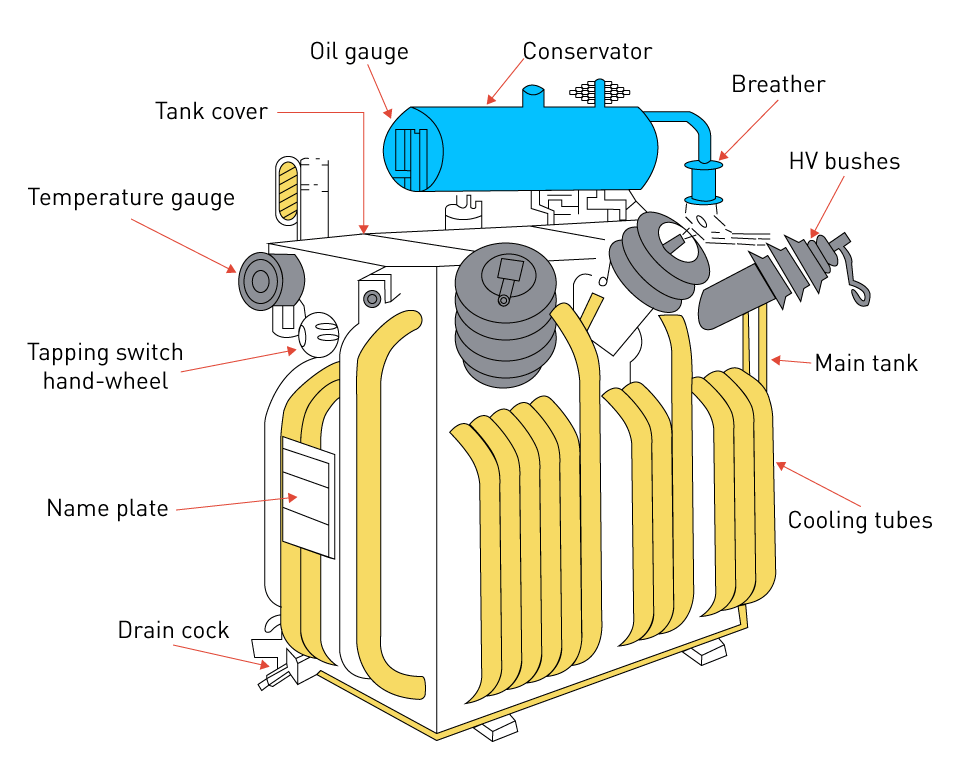
4. Main Components of a Transformer
A power transformer mainly includes:
- Core
- Windings
Auxiliary components:
- Oil tank and conservator
- Bushings
- Tap changers
All components used by Kete Transformer comply with IEC / IEEE standards, ensuring high reliability in global markets.
5. Why Transformer Oil Is Important
In oil-immersed transformers, transformer oil provides:
- Electrical insulation
- Efficient heat dissipation
Kete Transformer selects high-quality insulating oil and optimized cooling designs to improve thermal performance and extend service life.
6. Transformer Losses and Efficiency
Transformer losses include:
- Core (iron) loss
- Copper loss
By optimizing:
- Core material
- Winding structure
- Manufacturing process
Kete Transformer helps customers achieve lower operating losses and higher system efficiency.
7. How to Select the Right Transformer Capacity
Kete Transformer recommends:
- Selecting capacity based on actual load conditions
- Operating transformers at 75%–90% of rated capacity
- Avoiding long-term light-load or overload operation
Proper capacity selection reduces losses and significantly increases transformer lifespan.
8. Transformer Testing and Safe Operation
To ensure reliable operation, Kete Transformer advises regular monitoring of:
- Temperature
- Load current
- Output voltage
Modern transformers supplied by Kete Transformer can be equipped with:
- Temperature monitoring systems
- Protection and alarm devices
Conclusion
A solid understanding of power transformer basics is essential for every power professional.
Backed by engineering expertise and manufacturing experience, Kete Transformer is committed to providing safe, efficient, and customized transformer solutions for power distribution systems worldwide.