





By Kete Transformer
A box-type transformer substation (also known as a prefabricated substation or package substation) is a compact outdoor power distribution system that integrates:
- High-voltage primary equipment
- Distribution transformer
- Low-voltage switchgear
- Secondary control devices
All components are factory-assembled inside a sealed, corrosion-resistant, movable steel enclosure, designed for harsh outdoor environments.
It combines:
✔ Voltage transformation
✔ Power distribution
✔ Protection and monitoring
into a single efficient unit, making it ideal for urban grids, industrial plants, renewable energy projects, and infrastructure development.
What Is a Box-Type Substation?
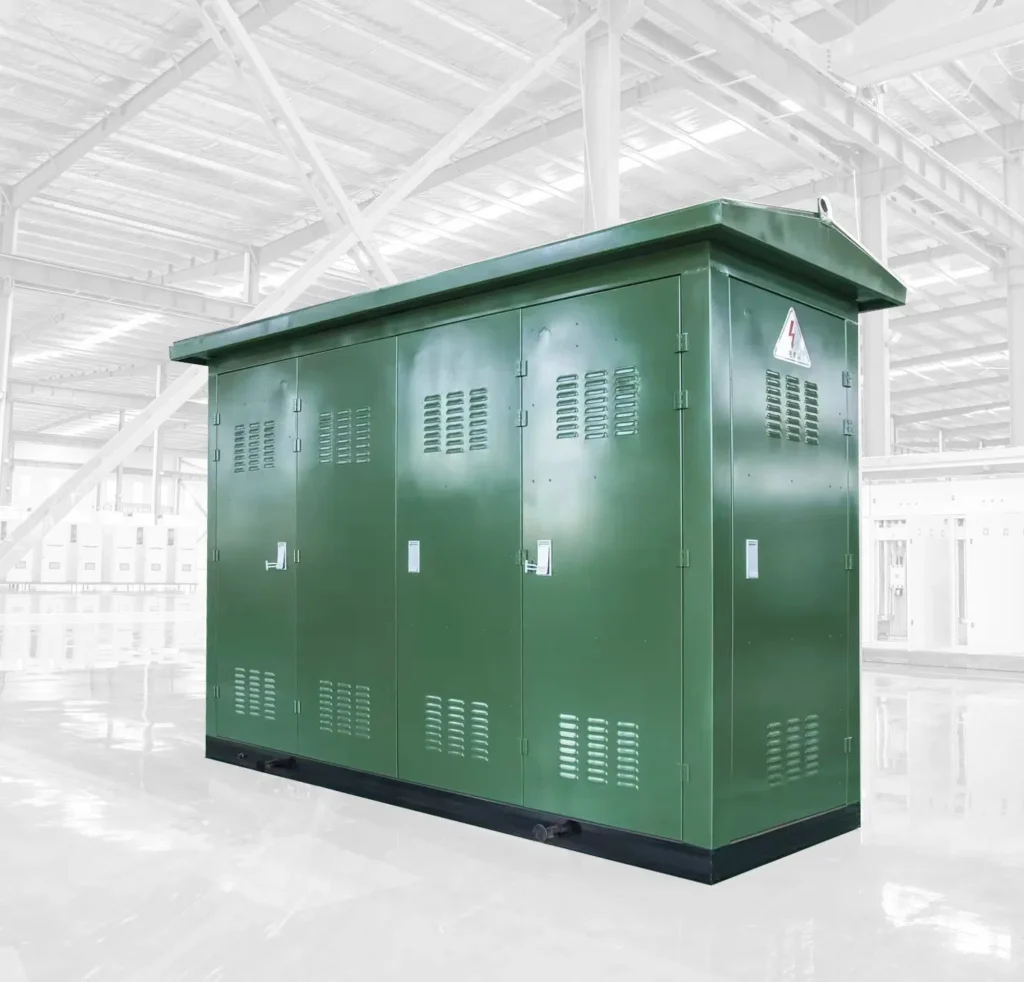
A box-type substation integrates:
- High-voltage switchgear
- Distribution transformer
- Low-voltage distribution equipment
- Metering and reactive power compensation systems
into one sealed metal enclosure.
Key advantages:
- Moisture-proof
- Dust-proof
- Fire-resistant
- Anti-corrosion
- Theft-resistant
- Compact footprint
- Fast installation
These substations are widely used in:
✔ Mines
✔ Factories
✔ Oil & gas fields
✔ Wind farms
✔ Residential communities
✔ Construction projects
They replace traditional civil-built substations with lower cost, faster deployment, and higher flexibility.
Main Structure of a Box-Type Substation
Box substations consist of three primary sections:
🔹 High-Voltage Compartment
May include:
- SF₆ or vacuum circuit breakers
- Ring main units (RMU)
- Load switch + fuse protection
- Surge arresters
- Metering devices
🔹 Transformer Compartment
Usually equipped with:
- Oil-immersed transformers
- Or dry-type transformers
🔹 Low-Voltage Compartment
Includes:
- Main circuit breaker
- Outgoing feeder breakers
- Capacitor banks (optional)
- Metering and protection systems
European-Type vs American-Type Box Substations Explained
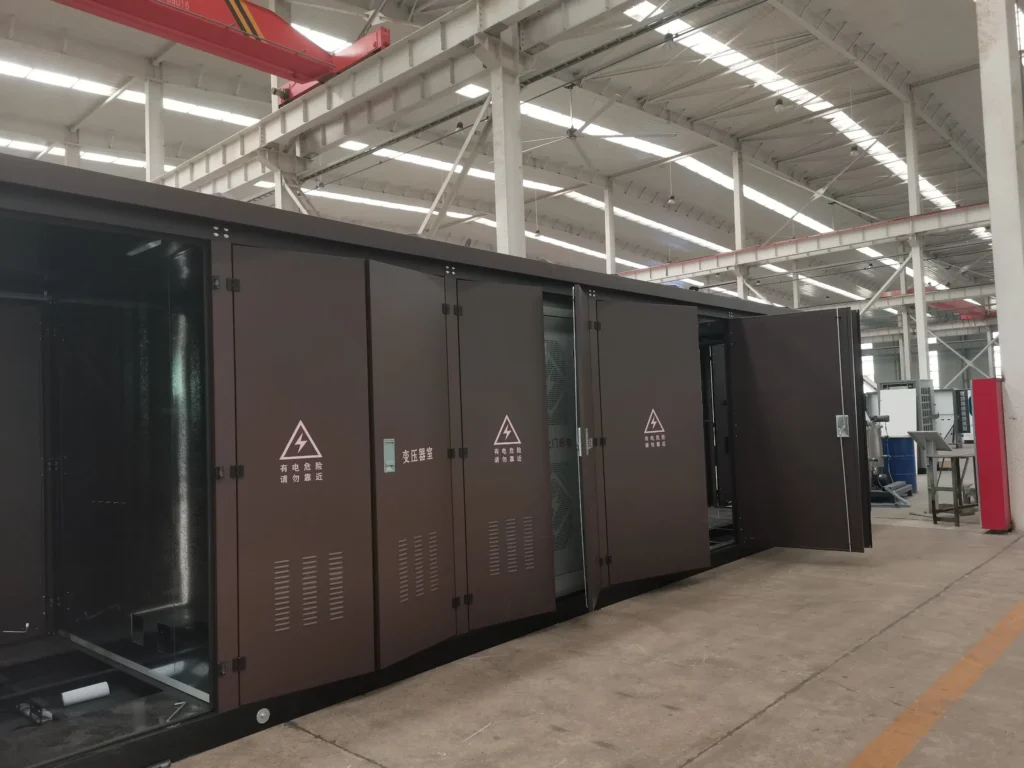
🇪🇺 European-Type Box Substation
Features:
- Independent HV, transformer, and LV compartments
- Flexible configuration
- Supports automation systems
- Higher capacity (up to 1250 kVA commonly)
Pros:
✔ Better system flexibility
✔ Suitable for critical loads
✔ Lower electromagnetic radiation
Cons:
✖ Larger size
✖ Requires ventilation systems
Best for:
Residential complexes, high-rise buildings, industrial power supply
🇺🇸 American-Type Box Substation
Features:
- Transformer and switchgear integrated into one oil tank
- Plug-in fuse + load switch protection
- Extremely compact footprint
Pros:
✔ Small size
✔ Easy installation
✔ Lower project cost
✔ Good heat dissipation
Cons:
✖ Limited automation
✖ Lower expansion capability
✖ Less suitable for critical loads
Best for:
Low-rise residential areas, temporary power, non-critical supply
Box Substation Operation & Maintenance Essentials
✔ Installation Requirements
- Install on elevated concrete platform (avoid flooding)
- Reliable grounding at multiple points
- Ensure ventilation clearance
- Natural airflow cooling preferred
✔ Routine Inspection (At least monthly)
Check:
- Foundation stability and sealing
- Grounding integrity
- Load balance across phases
- Switch positions and meter readings
- Environmental safety
✔ Cleaning & Equipment Care
- Annual dust removal inside compartments
- Fan operation testing
- Lubrication of mechanical parts
- Cable and surge arrester insulation testing
✔ Safety During Maintenance
⚠ Always isolate both primary and secondary circuits before tightening terminals
⚠ Never force switch mechanisms
⚠ Use insulation caps for unused RMU cable sockets
⚠ Avoid short-circuit test plugs during operation