



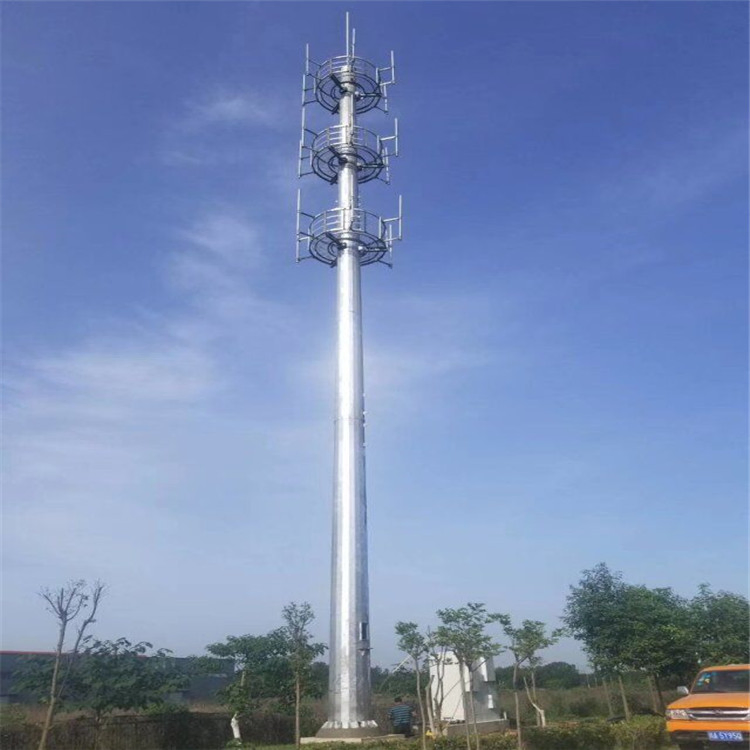
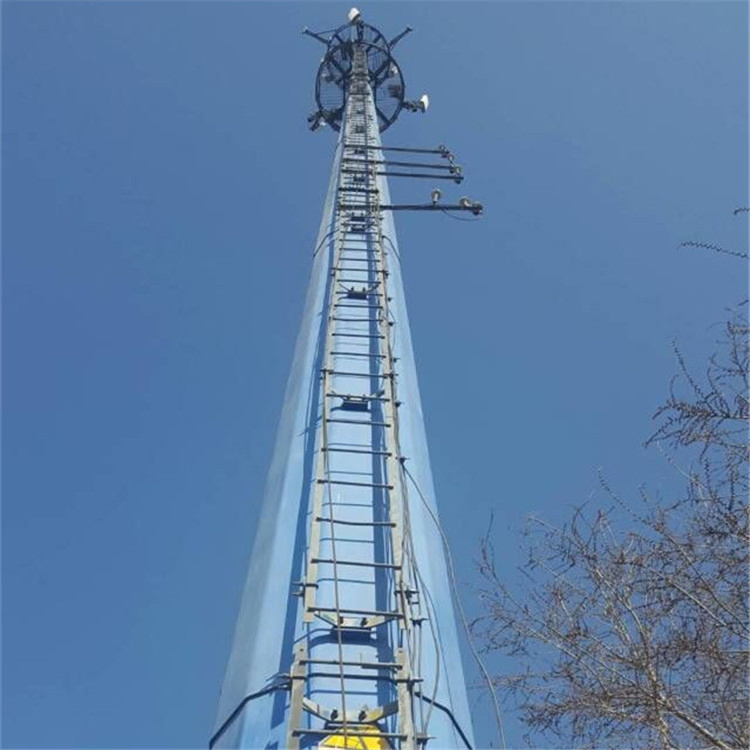
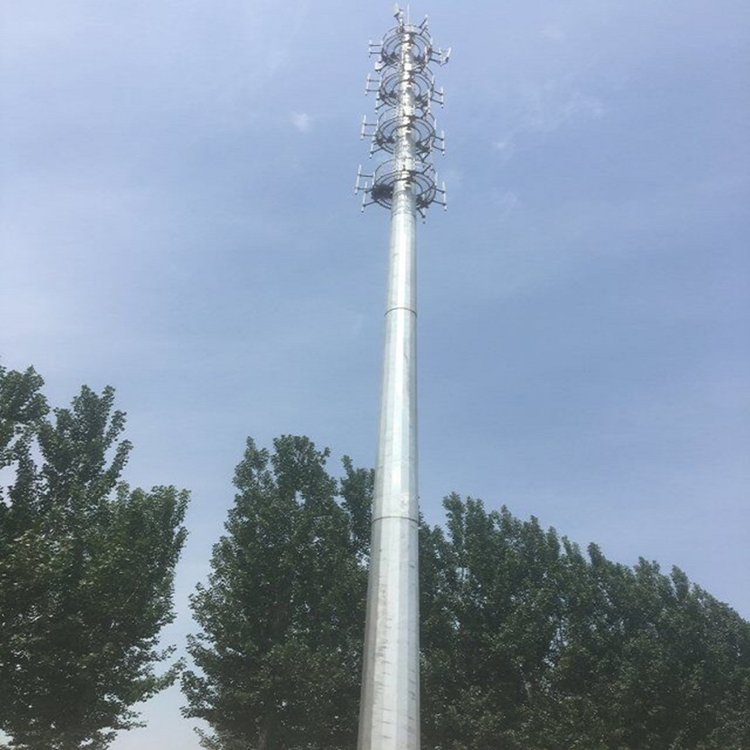
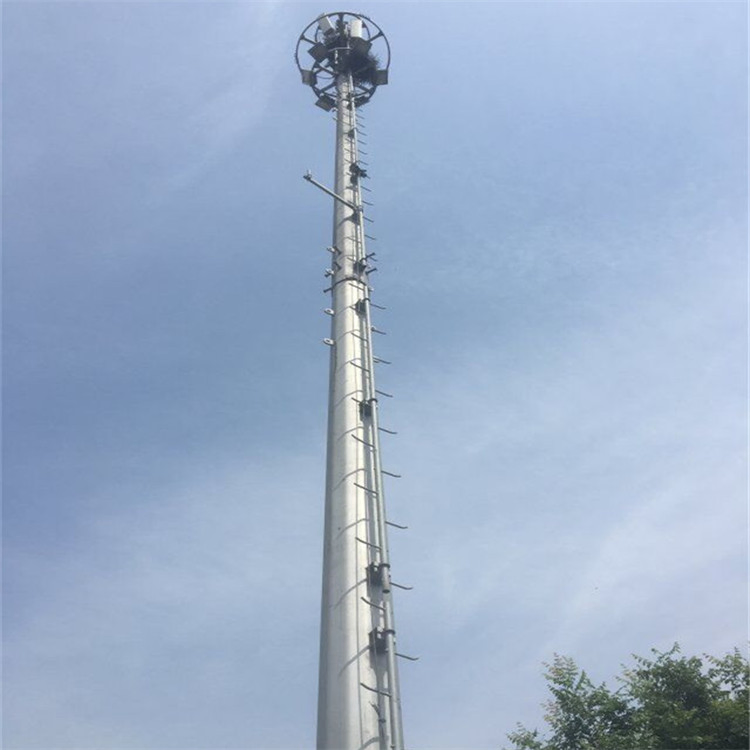
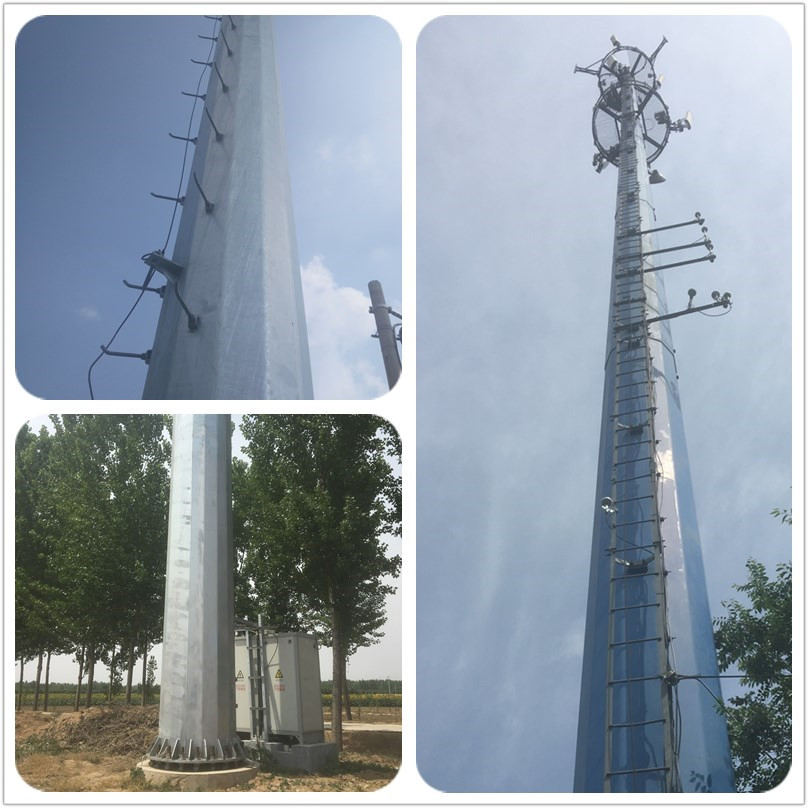
Hot DIP Galvanized Single Pipe Telecom Steel Tube Monopole Pole Radio Antenna Tower
Overview
Pole towers are the core support structures in power and telecommunications transmission lines. Their primary function is to support overhead conductors, cables, or communication lines at a safe height while also bearing the weight of the cables, wind, ice, and snow, ensuring stable operation.
Product Introduction
A steel pipe transmission tower, also known as a transmission line steel pipe pole, is a new type of iron tower. Resembling a single tubular structure, it is constructed from steel plates machined into tapered or polygonal tubes. It typically consists of crossarms, a tower, and a baseplate.
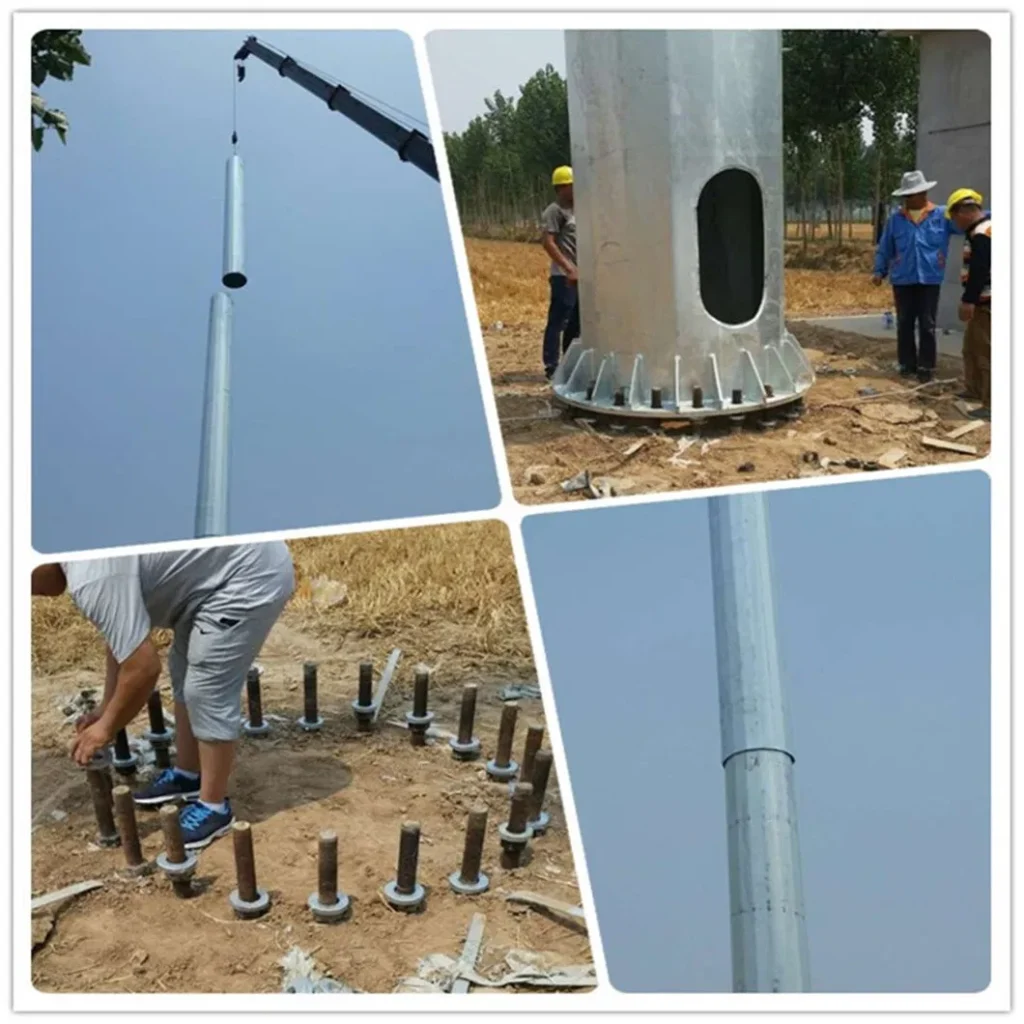
1.The cross-section of a tower is often a polygon, such as a hexagon, octagon, or dodecagon. The tower is typically constructed from one or more sections of steel pipe connected by high-strength bolts through connectors. Double nuts are used at the base to fine-tune the tower’s verticality.
2.In power systems, it offers significant advantages over traditional wooden towers. Its clean and aesthetically pleasing appearance makes it suitable for urban areas and other areas requiring environmental beautification. It offers increased safety and stability, lower maintenance costs, and a more aesthetically pleasing aesthetic.
Ⅱ.Application Scenarios
Power Transmission: Used to support transmission lines and ensure reliable power delivery, it has a wide range of applications, from low-voltage distribution networks to high- and ultra-high-voltage transmission lines.
1.Communications: Serving as the supporting structure for communication base stations, it can mount antennas, signal boosters, and other equipment. It can also be integrated with smart poles to enable 5G base station deployment.
2.Transportation: It can serve as streetlight poles, traffic sign poles, and signal light poles. It can also integrate monitoring equipment and smart charging stations, facilitating the development of smart transportation.
3.Other Industries: In water conservancy, environmental protection, emergency response, and natural resources, the poles can be equipped with monitoring equipment, broadcast speakers, and other equipment for water conservancy facility monitoring, grid-based air pollution monitoring, and forest fire prevention.
Ⅲ. Structural Characteristics: The Core Guarantee of Load-Bearing and Stability
1. Strong Load Adaptability
Towers must withstand multiple loads, including their own weight (dead load), external environmental loads (wind load, icing load, seismic forces), and functional loads (conductor tension, antenna weight, equipment platform load, etc.). By optimizing the structural form (such as lattice, cylindrical, or frame), these loads can be distributed and transferred to the foundation. For example, the crossarm design of a transmission tower can balance the horizontal tension of the conductors and prevent the tower from tilting.
2. Outstanding Stability Design
Geometric Stability: Lattice towers (such as angle steel towers and steel tubular towers) utilize geometric invariance through the combination of triangular and quadrilateral elements to resist deformation. Single-pole towers (such as concrete poles) enhance their anti-overturning capacity through a thickened base diameter.
Joint Strength: Connections (bolts, welds, flanges) are reinforced to ensure load transfer without weak links. For example, thickened connection plates and high-strength bolts (grade 8.8 or above) are used at the junction between the main material and the crossarms of high-voltage transmission towers. Modularity and Scalability
Most towers utilize standardized components that can be assembled and spliced based on height and span requirements. For example, a communication tower can be raised in height by adding sections or by adding brackets to expand equipment installation space. Some towers also have pre-recorded interfaces to support the later installation of lightning protection devices and monitoring equipment.
Product Features
Ⅰ.Strong Structural Stability
1.High Load-Bearing Capacity: Towers must withstand the weight and tension of conductors/cables, as well as external forces such as wind loads, snow and ice loads, and earthquake loads. Therefore, the structural design must meet high-strength load-bearing requirements. Tower components (such as angle steel and steel pipes) are connected using appropriate methods (bolts or welding) to form a stable lattice or truss structure, distributing the load and preventing localized excessive stress.
2.Deformation Resistance: Under long-term loads and sudden external forces, the tower and its components must maintain minimal deformation to ensure safe line operation. For example, the deflection (the degree of curvature of the tower) of a transmission tower must be controlled within the design tolerance to prevent excessive conductor swaying or tower overturning.
Ⅱ. Wide Material Adaptability
1. Diverse Material Selection: Depending on the application scenario (e.g., high-voltage transmission, communication base stations, suburban/mountainous environments, etc.),
2.Pole towers can be constructed from a variety of materials:
Steel Tubular Towers: Using seamless or welded steel tubes, they offer a simple structure and low wind resistance, making them suitable for areas with high voltages, heavy loads, or high aesthetic requirements (e.g., urban areas).
Ⅲ. High Design Flexibility
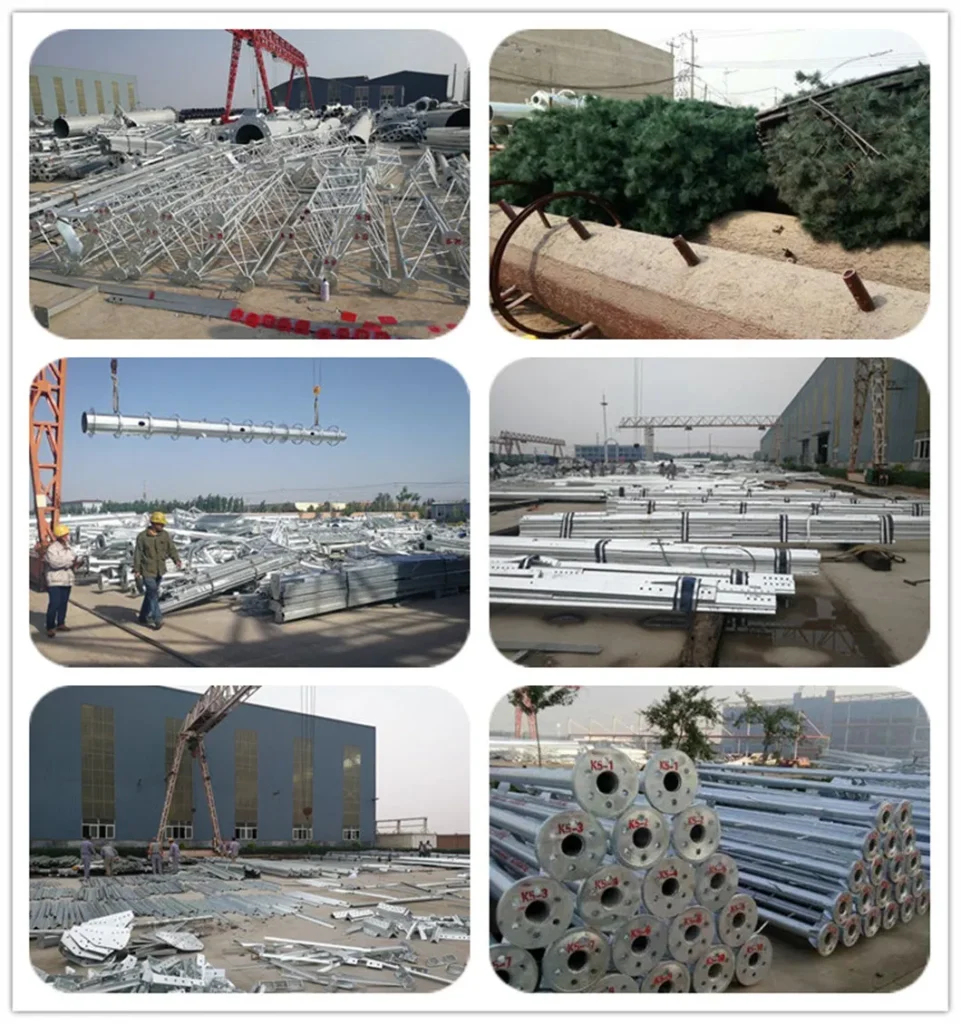
1.Modular Design: Tower components (tower sections, crossarms, diagonals, etc.) are mostly standardized modules that can be assembled based on height and load requirements. This facilitates factory prefabrication, transportation, and on-site installation, reducing construction complexity.
2.Terrain Adaptability: A variety of foundation types (such as pile foundations, stepped foundations, and anchor foundations) and tower leg structures (such as high and low legs) can be designed for diverse terrains, including mountainous, hilly, swampy, and coastal areas. This reduces excavation and adapts to complex geological conditions.
3.Functional Scalability: Pre-set locations for equipment installation (such as communication antenna mounts and monitoring sensor platforms) can be provided, along with integrated lightning protection and grounding systems to meet the needs of multiple scenarios (e.g., shared towers for “power + communications”).
Ⅳ.Outstanding Safety and Reliability
1.Lightning Protection and Grounding: A lightning rod is typically installed at the top of the tower, and the tower body is connected to a grounding device to direct lightning into the ground, preventing damage to the tower and transmission equipment.
2.Fall Protection: Ladders, safety cages, work platforms, and other auxiliary facilities are installed to ensure safe access for maintenance personnel. Some towers utilize anti-loosening bolts and corrosion-resistant joints to reduce the risk of structural failure.
Ⅴ.Balance between Economy and Maintainability
1.Maintainability: Metal poles have anti-corrosion coatings that can be regularly repaired, and bolted connections facilitate component replacement. Concrete poles can be repaired after surface damage, minimizing overall maintenance workload.
2.Long Lifecycle: Through proper design and maintenance, the service life of a tower can be matched to the lifecycle of the line or equipment (for example, the lifespan of a transmission tower is typically the same as that of the line, approximately 30 years or more), reducing repetitive construction costs.
Ⅵ.Advantages of towers
1.The core advantages of poles and towers lie in their high strength and stability, flexibility in materials and design, efficient construction and maintenance, and scalable functions, making them indispensable key facilities in the fields of power transmission, communication coverage, smart cities, etc., which can not only meet the basic needs of traditional projects, but also adapt to the future development trends of intelligence and diversification.
Ⅶ. Application Characteristics: Targeted Scenario and Functionality
1. Terrain and Environmental Adaptability
① Plain Areas: Concrete poles and lightweight steel towers can be used, with simple foundations (such as stepped concrete foundations).
② Mountainous and Hilly Areas: Lightweight poles and towers (such as angle steel towers and steel poles) are preferred, combined with pile foundations or rock anchors to reduce excavation.
③ Coastal and Marshland Areas: Anti-corrosion-treated steel pipe towers or composite towers are used, with pile or caisson foundations to prevent subsidence.
2. Differentiation of Functional Scenario
① Transmission Towers: Must meet conductor insulation distance and lightning protection grounding requirements. Crossarm length and angle are designed based on the voltage level (10kV-1000kV). For example, a 500kV transmission tower can have a crossarm span of 20-30 meters.
② Communication Towers: Focus on height (30-100 meters) and antenna installation space. Feeder holes and ladders must be reserved on the tower body. Some towers also require 3. Electromagnetic Interference Resistance.
Transportation Towers (such as streetlight poles and surveillance poles): Emphasize aesthetics and lightweight design. Most are single-pole towers with integrated cable storage at the base.
Ⅷ. Safety and Maintenance Features: Long-Term Reliability
1. Redundant Safety Design
Structural strength is verified based on “limit conditions” (e.g., 100-year wind speed, maximum ice thickness), with a safety factor of 1.2-1.5 times. Key locations (such as the tower base and crossarm base) are reinforced with ribs or thickened materials to prevent localized damage.
2. Ease of Maintenance
① Steel towers: Exposed components facilitate inspection of bolt tightness and corrosion, and localized damage can be replaced individually.
② Concrete towers: Smooth surfaces resist staining, but internal steel corrosion can be difficult to detect, requiring regular inspection of the protective layer thickness.
Most towers are equipped with ladders and maintenance platforms, and some high-voltage towers are equipped with fall arrest devices to enhance maintenance safety.
3. Lifespan and Cost-Effectiveness
Steel towers (with anti-corrosion treatment) have a lifespan of 30-50 years, concrete towers 50-80 years, and composite towers approximately 20-30 years (increasing with technological advancements). Initial cost: Composite materials > steel > concrete. However, considering maintenance costs, steel and composite materials offer greater long-term economic benefits in complex environments.
Product structure
The pole towers independently developed by our company have been continuously learning from advanced technologies at home and abroad, and after continuous summary and absorption, they have the characteristics of distinct high reliability, such as wind resistance, various terrains, convenience and speed.
Ⅰ.Strong Structural Stability
1.High Load-Bearing Capacity: Towers must withstand the weight and tension of conductors/cables, as well as external forces such as wind loads, snow and ice loads, and earthquake loads. Therefore, the structural design must meet high-strength load-bearing requirements. Tower components (such as angle steel and steel pipes) are connected using appropriate methods (bolts or welding) to form a stable lattice or truss structure, distributing the load and preventing localized excessive stress.
2.Deformation Resistance: Under long-term loads and sudden external forces, the tower and its components must maintain minimal deformation to ensure safe line operation. For example, the deflection (the degree of curvature of the tower) of a transmission tower must be controlled within the design tolerance to prevent excessive conductor swaying or tower overturning.
Ⅱ. Wide Material Adaptability
1. Diverse Material Selection: Depending on the application scenario (e.g., high-voltage transmission, communication base stations, suburban/mountainous environments, etc.),
2.Pole towers can be constructed from a variety of materials:
Steel Tubular Towers: Using seamless or welded steel tubes, they offer a simple structure and low wind resistance, making them suitable for areas with high voltages, heavy loads, or high aesthetic requirements (e.g., urban areas).
Ⅲ. High Design Flexibility
1.Modular Design: Tower components (tower sections, crossarms, diagonals, etc.) are mostly standardized modules that can be assembled based on height and load requirements. This facilitates factory prefabrication, transportation, and on-site installation, reducing construction complexity.
2.Terrain Adaptability: A variety of foundation types (such as pile foundations, stepped foundations, and anchor foundations) and tower leg structures (such as high and low legs) can be designed for diverse terrains, including mountainous, hilly, swampy, and coastal areas. This reduces excavation and adapts to complex geological conditions.
3.Functional Scalability: Pre-set locations for equipment installation (such as communication antenna mounts and monitoring sensor platforms) can be provided, along with integrated lightning protection and grounding systems to meet the needs of multiple scenarios (e.g., shared towers for “power + communications”).
Ⅳ.Outstanding Safety and Reliability
1.Lightning Protection and Grounding: A lightning rod is typically installed at the top of the tower, and the tower body is connected to a grounding device to direct lightning into the ground, preventing damage to the tower and transmission equipment.
2.Fall Protection: Ladders, safety cages, work platforms, and other auxiliary facilities are installed to ensure safe access for maintenance personnel. Some towers utilize anti-loosening bolts and corrosion-resistant joints to reduce the risk of structural failure.
Ⅴ.Balance between Economy and Maintainability
1.Maintainability: Metal poles have anti-corrosion coatings that can be regularly repaired, and bolted connections facilitate component replacement. Concrete poles can be repaired after surface damage, minimizing overall maintenance workload.
2.Long Lifecycle: Through proper design and maintenance, the service life of a tower can be matched to the lifecycle of the line or equipment (for example, the lifespan of a transmission tower is typically the same as that of the line, approximately 30 years or more), reducing repetitive construction costs.
Specification
FAQS
1.What is the basic information about steel towers?
Basic types and applications of pole towers
Main categories of pole towers
By material, they can be divided into:
① Steel structure towers (such as angle steel towers and steel tube towers; high strength, lightweight, suitable for high-voltage transmission and communication base stations);
② Composite material towers (such as fiberglass towers; excellent insulation and aging resistance, often used in special environments).
③ By purpose, they can be divided into transmission towers, communication towers, road towers, signal towers, etc.
2. What are the differences in the application scenarios of different tower types?
① Steel structure towers: Suitable for high-voltage/ultra-high-voltage transmission lines of 220kV and above, cross-mountain and cross-river projects, and communication base stations (which need to carry antennas and other equipment).
② Composite material towers: Suitable for special environments such as coastal areas (salt spray resistance), chemical industry zones (corrosion resistance), and high-altitude areas (lightweight).
2. What are the tower design and parameters?
①Core factors in tower design
•Loads: Line weight (conductors, optical cables), external loads (wind load, ice and snow load, earthquake load), and additional loads (equipment weight and maintenance personnel weight);
•Environment: Topography (plains, mountains, swamps), meteorological conditions (maximum wind speed, ice thickness, temperature difference), and geological conditions (soil bearing capacity and groundwater level);
•Standards: Must comply with industry standards.
②How are tower heights and spacing determined?
• Height: Must meet the safety distance between the conductor and the ground (e.g., ≥ 7 meters in residential areas), the distance from crossing structures (roads, rivers), and the signal coverage requirements of communication equipment.
•Spacing: The spacing between transmission towers depends on the conductor type (the larger the conductor cross-section, the greater the spacing) and the terrain (approximately 500-800 meters in plain areas and 300-500 meters in mountainous areas). The spacing between communication towers is related to the signal frequency and coverage range (e.g., the spacing between 5G base stations is approximately 200-500 meters).
③Tower Wind and Ice Resistance Standards
Standards:
•Wind resistance: Designed based on the baseline wind pressure of the installation area (e.g., wind pressure ≥ 0.6 kN/m² in coastal areas), ensuring it will not collapse even under maximum wind speeds (e.g., 30 m/s, equivalent to force 11 winds).
•Ice resistance: Calculated based on the local maximum ice thickness (e.g., ice thickness ≥ 20 mm in parts of northern my country), preventing tower deformation or fracture due to excessive ice loads.
3.What are the production and quality aspects of pole towers?
① Tower Production Process
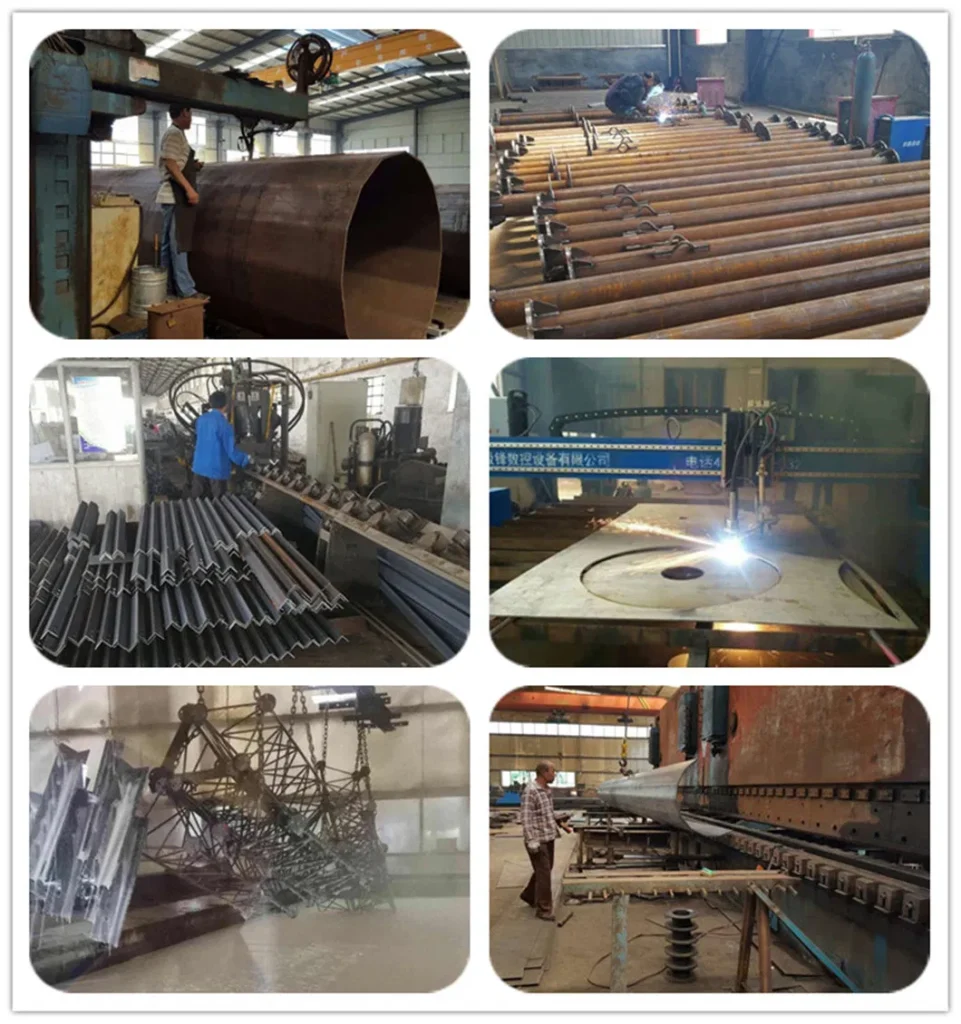
• Steel Towers: Steel Cutting → Welding/Bolting → Anti-corrosion Treatment (Hot-dip Galvanizing, Painting) → Assembly and Inspection;
• Composite Towers: Filament Winding → Resin Curing → Cutting and Forming → Insulation Testing.
② TowerQualityCompliance
• Raw material testing (steel and concrete strength grades, composite insulation properties);
• Structural performance testing (bearing capacity testing, bending tests);
• Corrosion testing(galvanizing thickness ≥ 85μm, concrete impermeability grade ≥ P6);
• Third-party certification (e.g., ISO 9001, transmission towers must pass type testing).
4. What are the installation and foundation requirements for towers?
①. Pre-installation Preparations
• Site Survey: Confirm that the terrain and geology meet the design requirements and clear any obstructions.
• Foundation Construction: Cast the foundation according to the tower type (for example, concrete towers use cast-in-place foundations, steel towers use cast-in-place pile foundations), ensuring that the foundation’s bearing capacity meets the requirements.
• Equipment Preparation: Lifting machinery (crane, winch), safety equipment (safety belts, insulating gloves), and obtain a construction permit (for example, a power outage permit is required for high-voltage lines).
②. Common Tower Foundation Types
• Concrete Towers: Commonly used foundations include stepped foundations (suitable for hard soils) and pile foundations (suitable for soft soils or swamps).
• Steel Towers: Common foundation types include slab foundations (load distribution), anchor foundations (suitable for rocky terrain), and caisson foundations (suitable for areas with high groundwater levels).
③. Pole Tower Installation Safety Standards
• During the lifting process, a dedicated person must ensure the correct positioning of the lifting points (to prevent tower deformation);
• Workers working at heights must wear safety harnesses and secure tools with ropes (to prevent falls);
• Transmission tower installation must follow the “power off, electrical testing, and grounding” procedure to avoid electric shock accidents.
5. How long do towers last and what is their maintenance requirement?
①. Regular Tower Maintenance and Maintenance Details.
Regular maintenance is required (recommended 1-2 times per year), including:
• Visual Inspection: Inspect concrete towers for cracks and exposed rebar; inspect steel towers for rust and loose bolts; inspect composite towers for damage;
• Load Inspection: Inspect conductors and equipment for loose structures and excessive attachments (such as vines or snow);
• Foundation Inspection: Inspect for settlement, water accumulation, and loss of surrounding soil.
②. Tower Service Life
• Steel Towers: 20-40 years (depending on anti-corrosion treatment; hot-dip galvanized towers have a longer service life; conventionally painted towers require periodic repainting);
• Composite Towers: 25-30 years (better aging resistance, but prolonged exposure to UV rays may affect strength).
③ How should tower damage (such as cracks or rust) be addressed?
• Steel tower corrosion: Remove rust and reapply anti-corrosion paint. Severely corroded components require replacement.
• Foundation settlement: Minor settlement can be corrected with grouting, while severe settlement requires rebuilding the foundation or relocating the site.
6. What are other common problems with pole towers?
①. The difference between pole towers and guyed towers
Poles (free-standing) require no auxiliary support and rely on their own structural stability to support loads. Guyed towers are secured by multiple sets of guy wires (steel cables). They are lighter and less expensive, but require more space (the guy wires take up more floor space) and are therefore suitable for open areas.
②. Approvals required for new pole towers
Required approvals include: planning permits (to comply with local land use plans), environmental impact assessments (to avoid ecological damage), industry licenses (for example, transmission towers require approval from the power department, while communications towers require approval from the radio regulatory department), and cross-regional approvals (for example, crossing highways and railways requires approval from the transportation department).
③. Pole Tower Recycling
Steel pole towers can be disassembled and re-welded/galvanized for use in low-load scenarios. Reinforced concrete pole towers can be crushed and used as building aggregate. Composite pole towers are more difficult to recycle and are typically treated through environmentally friendly degradation.
Why Choose us ?
Built to last, engineered to perform.
Kete Transformer is a key national-level manufacturer specializing in transformers, recognized as a “Contract-Honoring and Promise-Keeping” enterprise, a high-tech enterprise, and a national-level enterprise technology center. It is recommended in the national directory for rural and urban power grid construction and renovation, as well as a recommended supplier of major electromechanical equipment for hydropower projects. Its products have been awarded the title of “National Quality Inspection Qualified Product – Quality Trustworthy Product” and “Nationally Recognized Product for Mechanical Industry Users.
Our Project
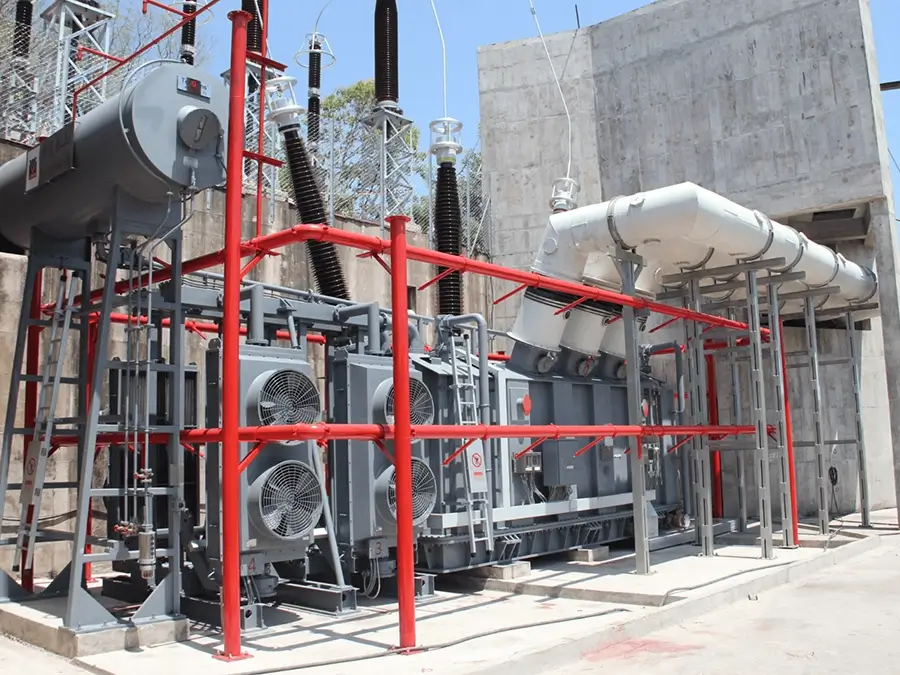
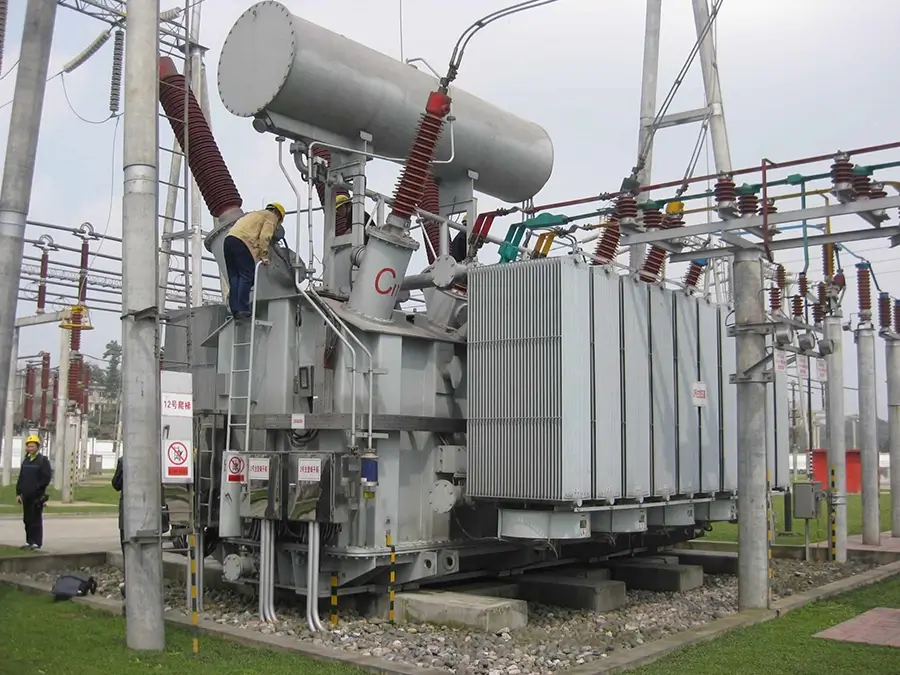
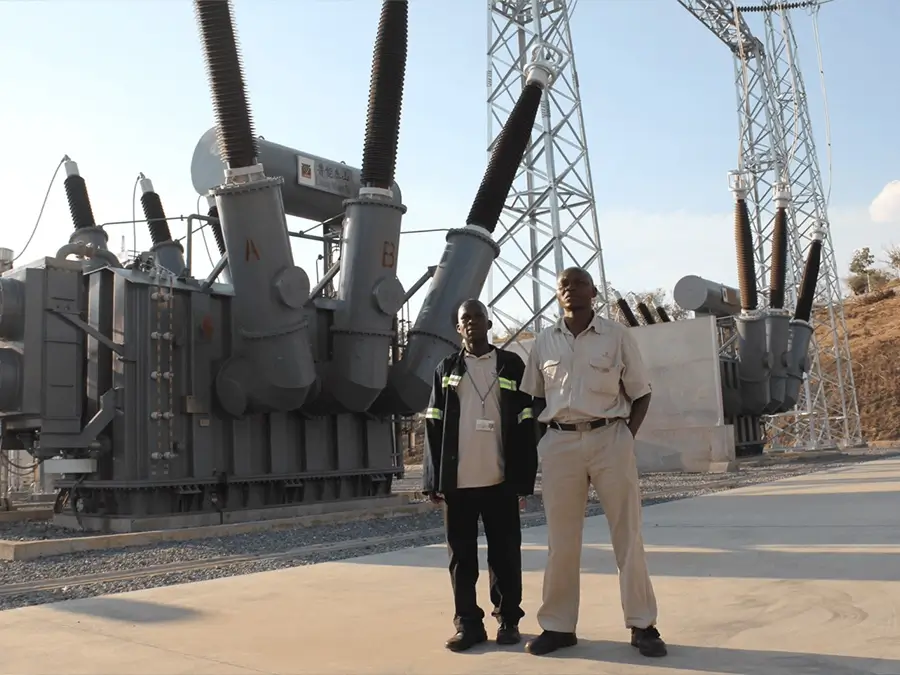
Our products not only dominate the domestic market but are also exported to more than 30 countries and regions, including Russia, Southeast Asia, Africa, and the Americas, serving industries such as power, municipal engineering, metallurgy, and petrochemicals.