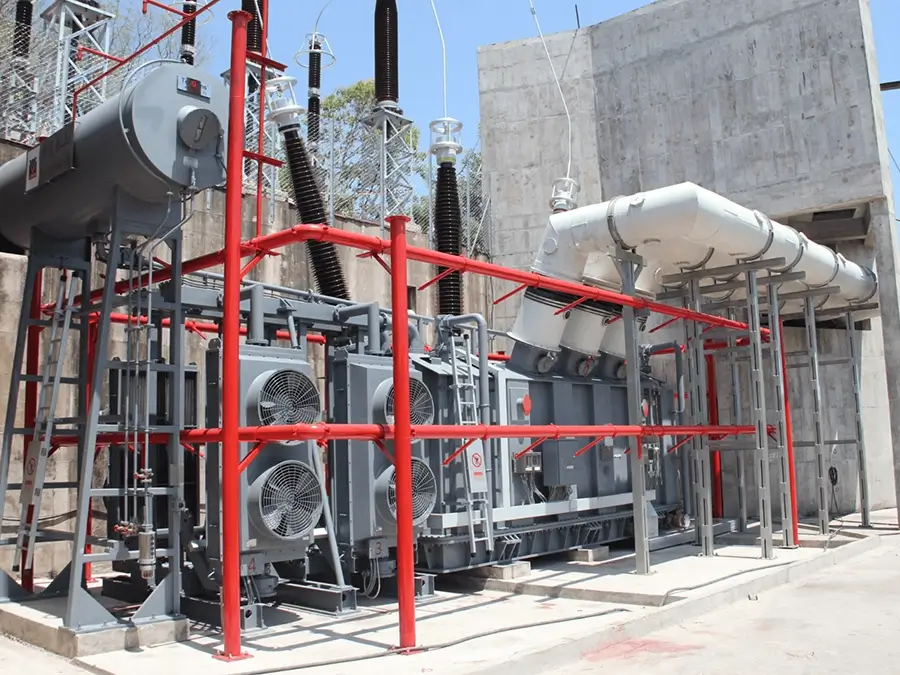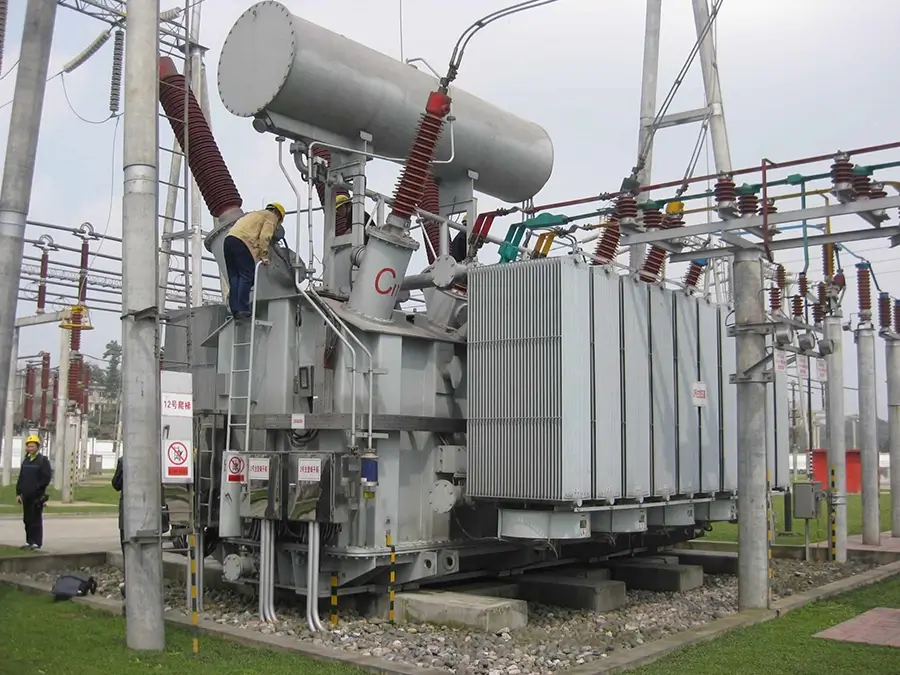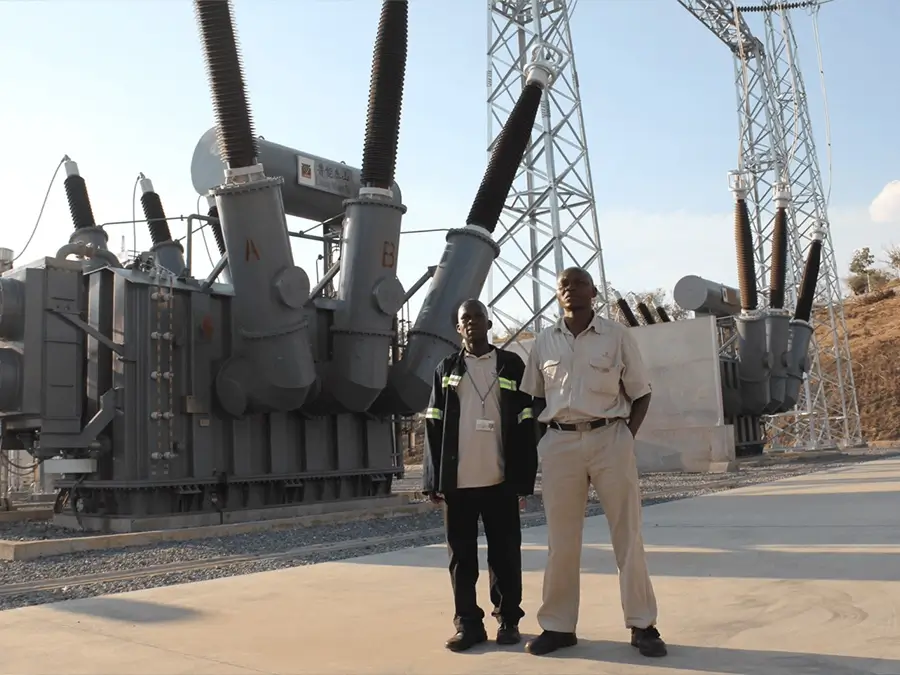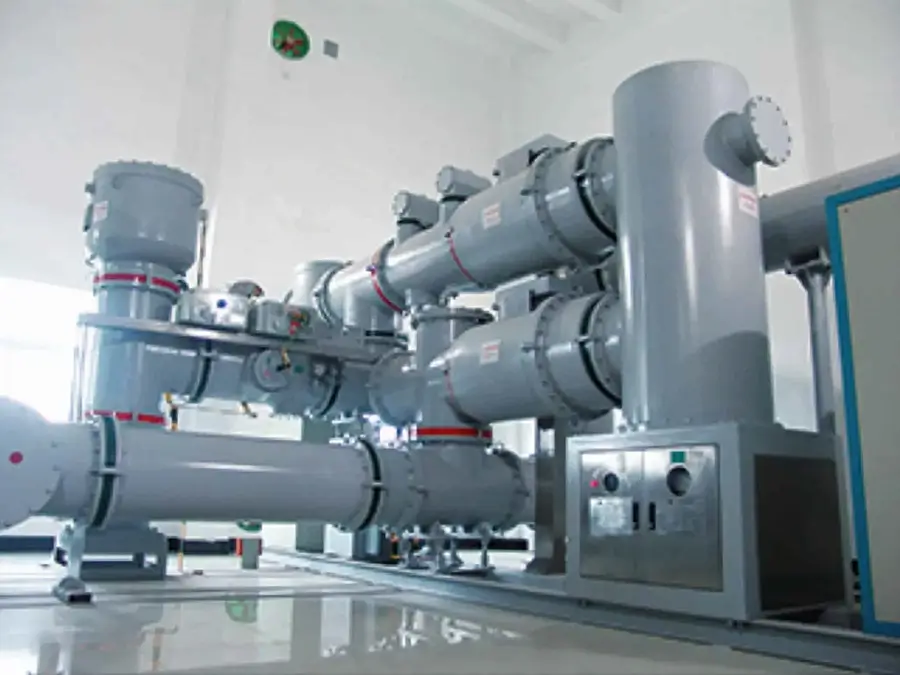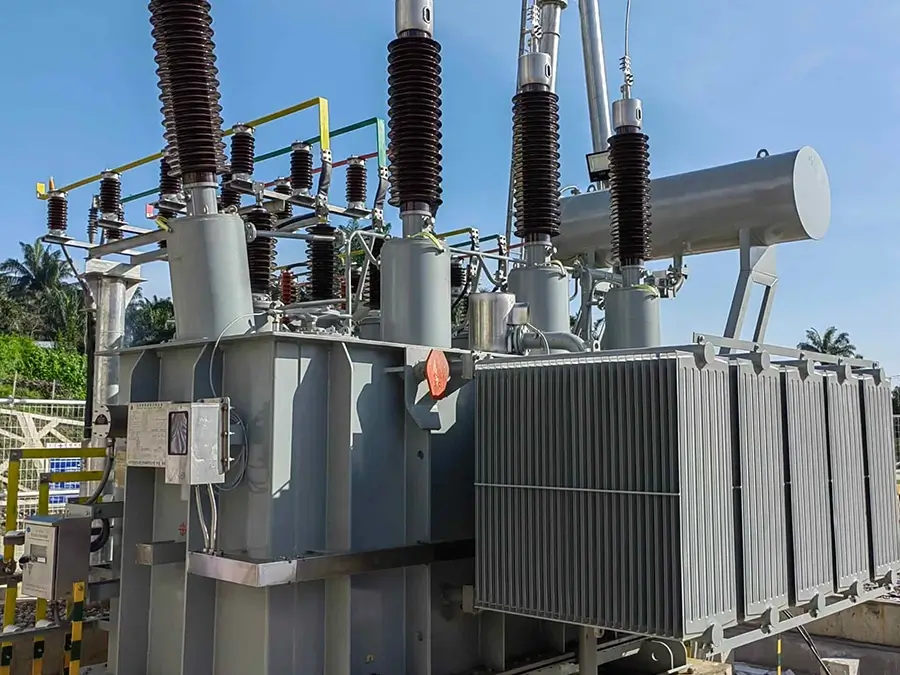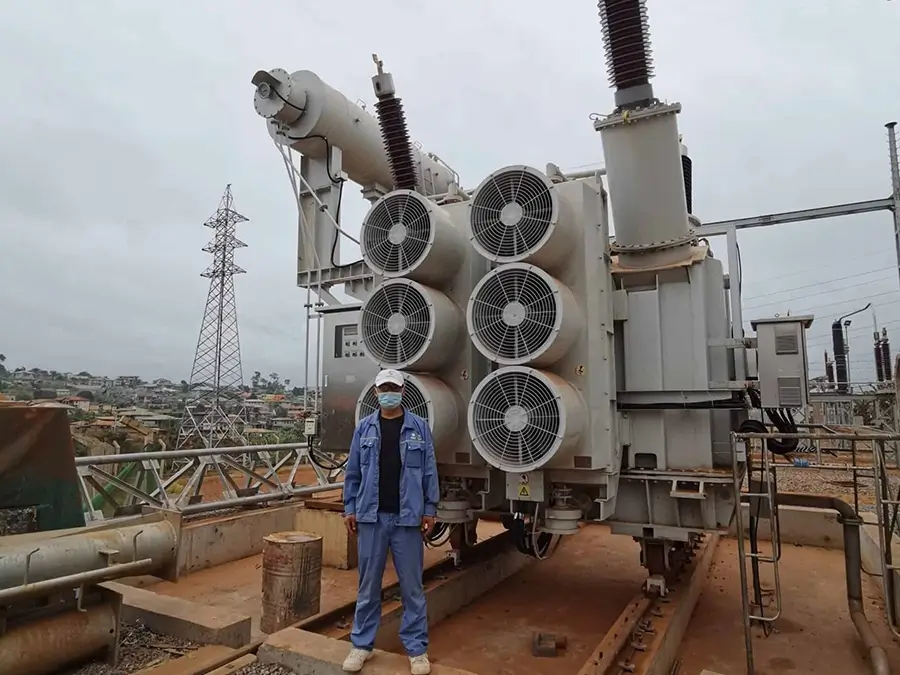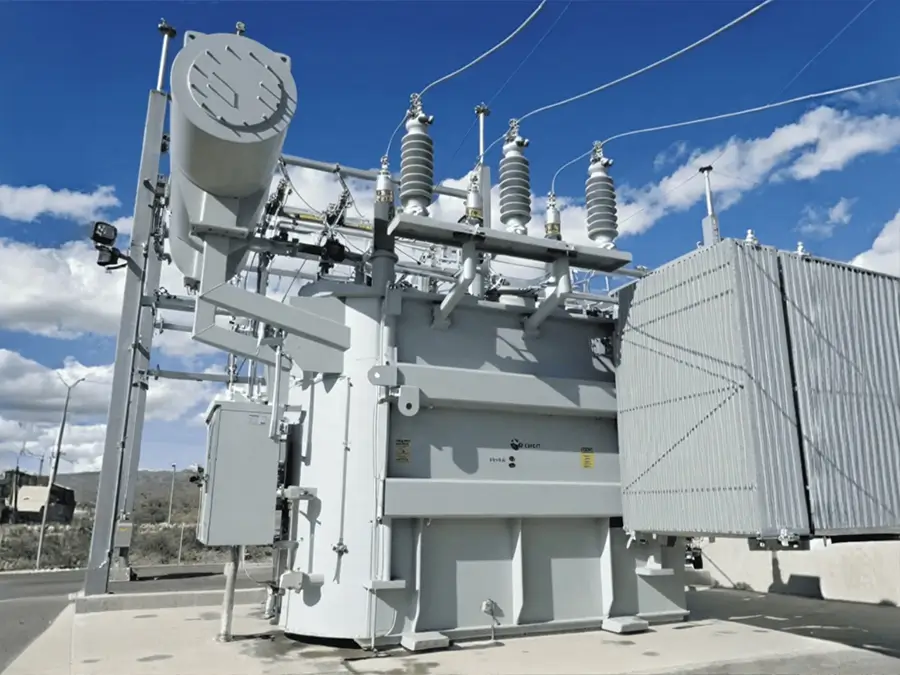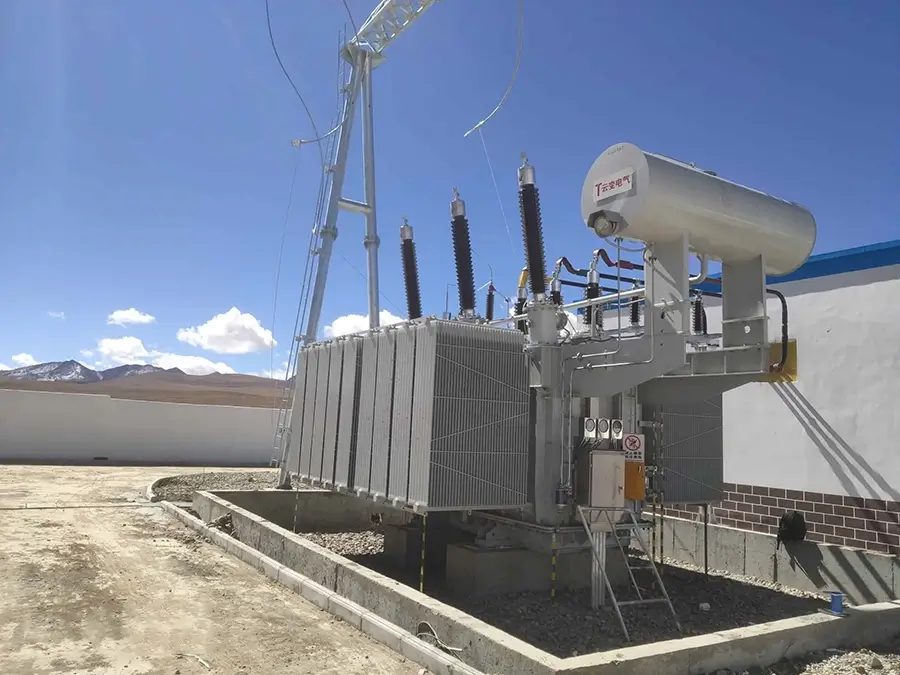




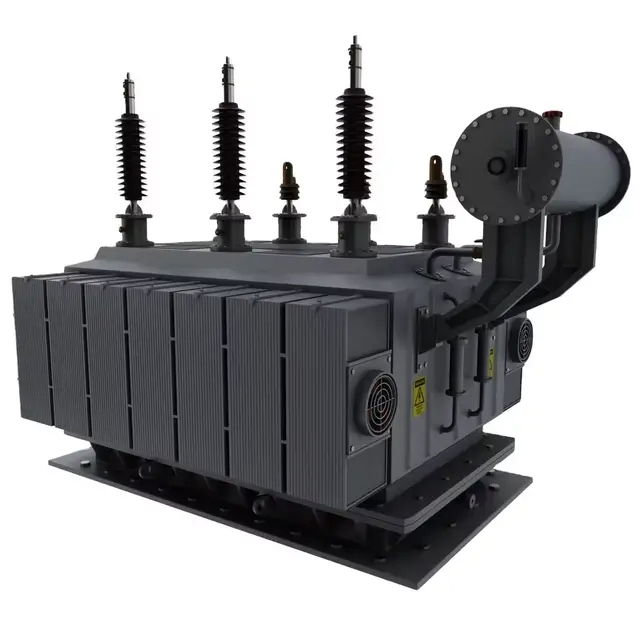
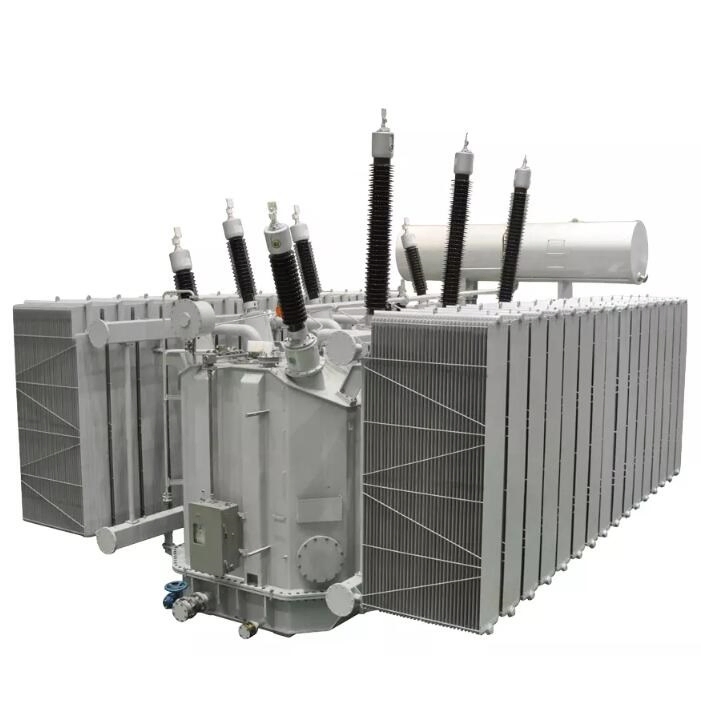
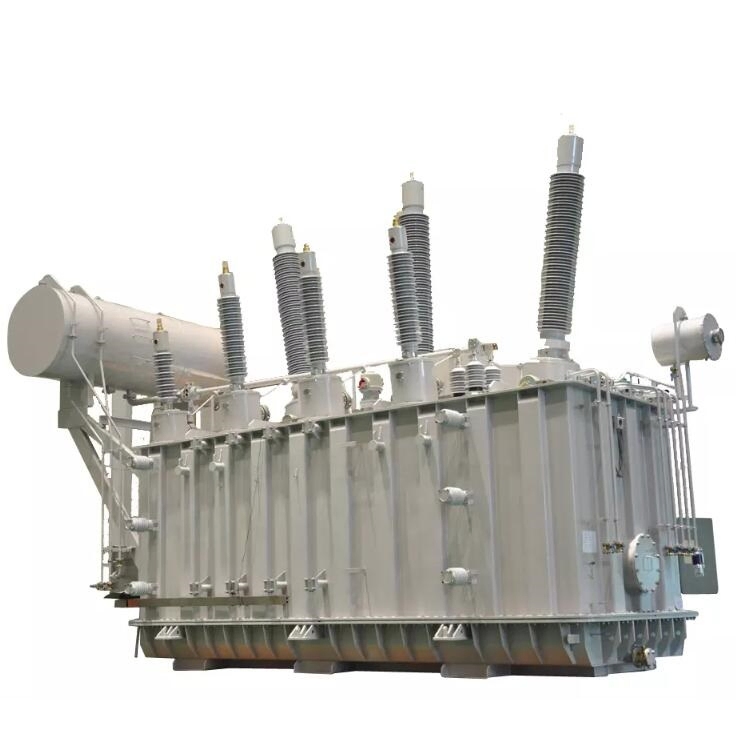
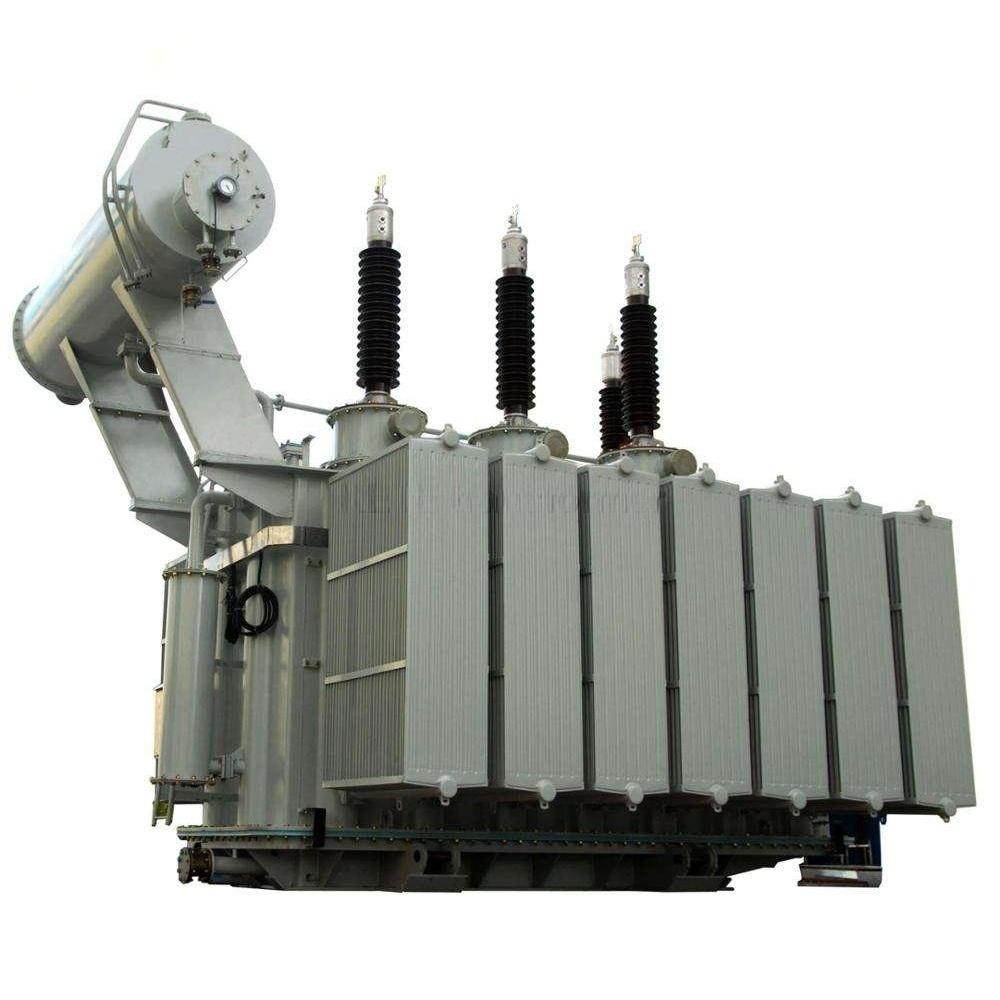
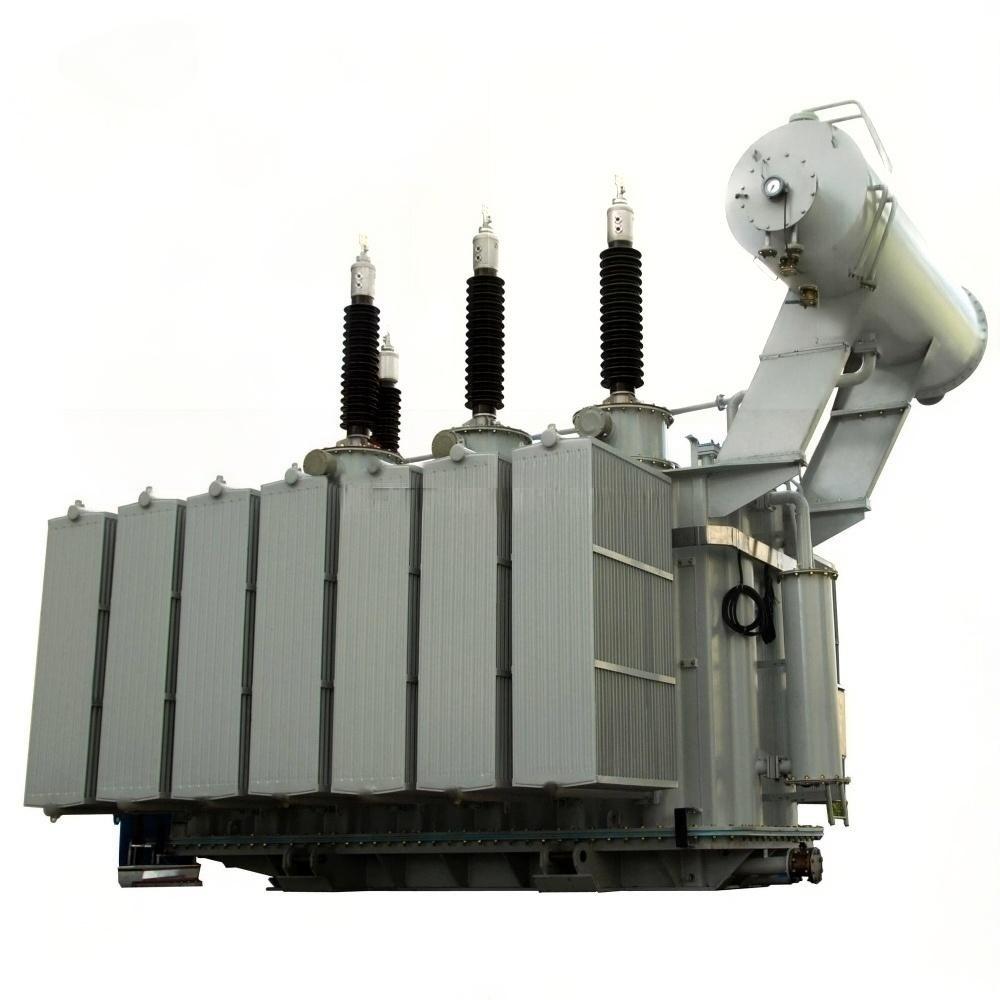
110kv CE OLTC Main Power Transformer
Overview
The 110KV main transformer developed by Kete is a core power equipment in the power system that connects the 110KV high-voltage power grid with medium and low-voltage power grids (such as 35KV and 10KV). It mainly undertakes the functions of “voltage reduction” and “power distribution” of electrical energy, serving as a hub equipment of the regional power grid. It plays a crucial role in ensuring electricity demand for industrial production, residents’ daily life and other purposes.
Brief introduction
Ⅰ.Brief introduction
1.Standards: IEC 60076, GB 1094
2.Power Rating: 30KVA-2500 kVA
3.Primary Voltage: 110KV
4.Secondary Voltage: 33kV or as required
5.Voltage regulation mode: OLTC tap-changing
6.Frequency: 50HZ or 60HZ
7.Type: 3 Phase Electric Power Transformer
8.Connection Type: Dyn11, Yyn0, or per client specification
9.Cooling method: ONAN, ONAF, ODAF
Ⅱ.Working conditions
1.Ambient Temperature: No more than +40℃ No less than -25℃, The monthly average temperature is no more than +30℃, The yearly average temperature is no more than +20℃
2.Altitude: No more than 1000m.
3.Relative air humidity:≤90%
4.installation site: no corrosion gas, No obvious dirt
5.Scope of application: Equipment that matches the requirements of “high-voltage power transmission” and “medium-low voltage power consumption/distribution” is a key device that connects the upper and lower levels in the power system.
Ⅲ.The tests for oil-immersed transformer
As the core equipment of the power system, the Kete 110KV main transformer requires various tests to be carried out before commissioning, during operation, and after maintenance. These tests are intended to verify whether its insulation performance, electrical characteristics, and mechanical status meet the standards. The main tests can be divided into four categories: insulation tests, characteristic tests, oil quality tests, and other auxiliary tests, with details as follows:
1.Insulation Tests (Ensuring Reliable Insulation)
①Insulation Resistance+Absorption Ratio / Polarization Index Test: Used to determine insulation moisture absorption and aging;
②Dielectric Loss Tangent (tanδ) Test: Used to detect insulation degradation and local defects;
③AC Withstand Voltage Test: Applies high voltage to assess the main insulation’s resistance to breakdown;
④DC Leakage Current Test: Assists in locating insulation damage and impurity issues.
2.Characteristic Tests (Verifying Electrical Performance)
①Transformation Ratio Test: Ensures the accuracy of voltage transformation;
②DC Resistance Test: Checks the winding welding and the contact status of the tap changer;
③No-Load Test: Measures iron loss and no-load current to determine the normalcy of the iron core magnetic circuit;
④Load Test: Measures copper loss and short-circuit voltage to verify the winding impedance and the compliance of the conducting wires;
⑤Tap Changer Test: Tests the transformation ratio and resistance of each gear to ensure reliable switching.
3.Oil Quality Tests (For Oil-Immersed Transformers, Safeguarding the “Secondary Insulation”)
①Routine Analysis: Detects moisture content, breakdown voltage, and dielectric loss to evaluate the oil’s insulation property;
②Dissolved Gas Analysis (DGA) in Oil: Diagnoses winding overheating and partial discharge;
③Comprehensive Chromatographic Analysis: Measures acid value, flash point, etc., to determine the oil’s aging degree.
4.Auxiliary Tests (Verifying Overall Status)
①Winding Deformation Test: Uses the impedance method / Frequency Response Analysis (FRA) to detect winding displacement and inter-turn short circuits;
②Bushing Test: Independently tests the bushing’s insulation and voltage withstand capacity to eliminate bushing defects;
③Protection Interlocking Test: Simulates faults to verify the tripping and alarm functions of the protection device.
Ⅳ.Component inspection of oil-immersed transformer
Centering on the four key dimensions of insulation, electrical system, cooling, and protection, we focus on hidden hazard inspection of critical components. The core tests are as follows:
1.Electrical components: Measure the DC resistance, transformation ratio and insulation of windings; measure the insulation resistance and grounding current of iron cores; inspect the appearance of bushings, and measure their insulation and partial discharge.
2.Insulation components: Inspect oil tanks for leakage and measure grounding resistance; conduct dissolved gas analysis, breakdown voltage test, and moisture/dielectric loss test on insulating oil.
3.Cooling system: Inspect radiators/pipelines for leakage, and test the function of fans/oil pumps; calibrate the accuracy of thermometers and the action value of temperature relays.
4.Protection and control components: Measure the resistance of each gear of the tap-changer and inspect the switching flexibility; conduct simulated fault tests to verify the action reliability of protection devices such as gas relays and pressure relief valves.
Ⅴ.Certificate: CE, UL, ISO, SGS, CCC
Structural Features
Ⅰ.Product features
The Kete 110kV main transformer is a core device connecting the 110kV high-voltage power grid and the 35kV/10kV medium-low voltage power grid. Its core characteristics center on “efficient power transmission, stable operation, and safety protection”, with specific details as follows:
1.Electrical Characteristics (Foundation of Core Functions)
①Voltage and Transformation Ratio: The primary side has a rated voltage of 110kV, and the secondary side has voltages of 35kV/10kV. The transformation ratio error is ≤ ±0.5%. Voltage stability is ensured through adjustment by an on-load tap-changer (within a ±5% range).
②Capacity and Loss: The common rated capacity ranges from 31.5 MVA to 100 MVA, and the recommended load factor is 60%-80%. Both no-load and load losses are low, complying with the energy efficiency standards specified in GB/T 6451.
③Insulation and Impedance: The 110kV side has a lightning impulse withstand voltage of 480kV and a power frequency withstand voltage of 200kV. The short-circuit impedance is 6%-10.5%, which balances short-circuit current and voltage fluctuations.
2.Structural Characteristics (Adapting to Long-Term High-Voltage Operation)
①Iron Core and Windings: The iron core is made of cold-rolled silicon steel sheets (to reduce iron loss). The high-voltage windings adopt a 纠结 /continuous winding structure (for short-circuit resistance), and copper conductors are used for efficient power transmission.
②Tank and Cooling System: A fully sealed oil tank is adopted to prevent oil oxidation. The cooling methods are divided into ONAF (Natural Oil Circulation with Air Forced Cooling, for small capacity) and OFAF (Forced Oil Circulation with Air Forced Cooling, for large capacity).
③On-Load Tap-Changer: It is an on-load type (capable of adjusting under load, suitable for scenarios with large voltage fluctuations) and is equipped with 5-9 taps.
3.Operational Characteristics (Adapting to Power Grid Operating Conditions)
①The designed service life is 20-30 years, and it can operate continuously under rated conditions. Short-term overload operation is allowed: 1.2 times the rated load for 2 hours, and 1.5 times the rated load for 15 minutes.
②It is suitable for outdoor environments with temperatures ranging from -30℃ to 40℃. For high-altitude areas, enhanced insulation is required. The fully sealed structure and redundant cooling system result in low maintenance requirements, and some units are equipped with online monitoring functions.
4.Protection Characteristics (Ensuring Safety of Equipment and Power Grid)
①Primary Protection:
·Differential protection: Triggers tripping within 0.1-0.5 seconds in case of short circuits in windings/bushings.
·Buchholz protection: Issues a light alarm for minor faults inside the tank and triggers tripping for severe faults.
②Backup/Auxiliary Protection:
·Overcurrent protection: Activates in case of external short circuits or overloads.
·Temperature protection: Triggers tripping when the oil temperature is ≥95℃ or the winding temperature is ≥105℃.
·Lightning arrester on the high-voltage side: Prevents overvoltage.
Ⅱ.Product Advantages
The 110KV main transformer is a core piece of equipment in power systems that connects medium-high voltage and medium-low voltage power grids. Its core advantages center on power supply reliability, economy, adaptability, and stability, with specific details as follows:
1.Precise Voltage Adaptability: It can connect the upper-level 220KV/330KV power grid with the 10KV/35KV distribution network. With a single-unit capacity ranging from 50 to 120MVA, it meets the regional power supply needs of small and medium-sized cities as well as large towns, avoiding excessive voltage span or capacity waste.
2.High Operational Economy: High-magnetic-conductivity silicon steel sheets and high-conductivity windings are used to reduce iron loss and copper loss. When matched with 110KV transmission lines, it reduces current, indirectly lowering the overall line loss and minimizing ineffective energy consumption.
3.Strong Power Supply Reliability: The windings and structure are reinforced to resist short circuits; some units are equipped with multi-winding configurations or on-load tap changers to stabilize voltage. It supports “dual main transformers” and “N-1” redundancy configurations, reducing the risk of power outages.
4.Stable Operation and Easy Maintenance: The cooling system (natural cooling/forced air cooling/forced oil circulation) controls temperature to prevent insulation aging. It is equipped with multiple standard protection devices and supports intelligent monitoring. The maintenance cycle is long (once every 1-2 years), and spare parts are easily accessible.
5.Wide Environmental Adaptability: It can be installed outdoors or indoors and operate in environments with temperatures ranging from -30℃ to 40℃ and at altitudes below 2000 meters. For high-pollution or high-altitude areas, it can be adapted through special designs.
In summary, its core value lies in “connecting upper and lower grids for adaptation + low energy consumption and economy + high-reliability power supply + long-cycle stable operation”, making it a key link from high-voltage power transmission to medium-low voltage power distribution.
Product structure
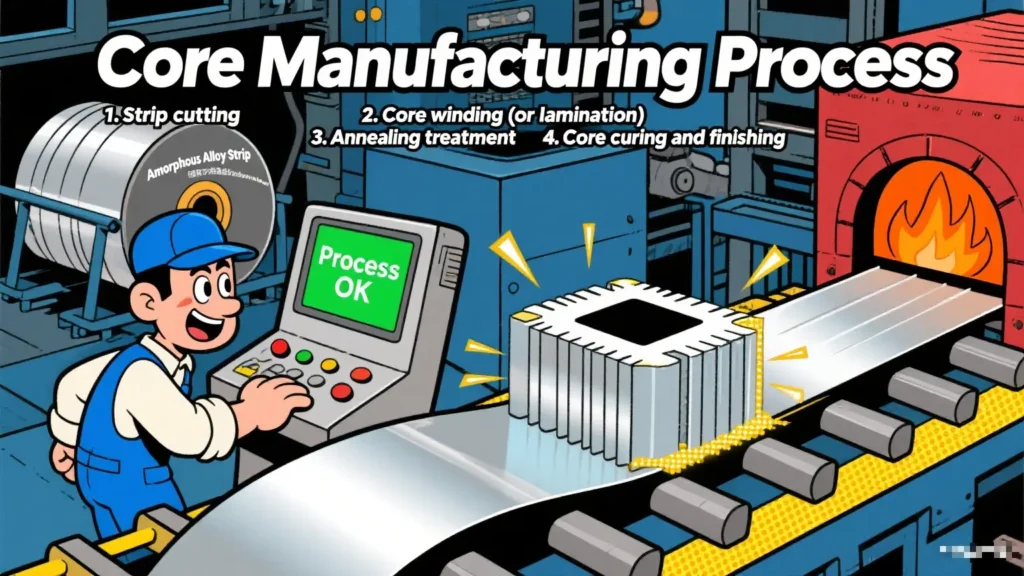
The production process of the 110kV main transformer developed by Kete is divided into four major stages: Production Preparation, Core Component Manufacturing, General Assembly and Integration, and Testing and Inspection. The details are as follows:
Ⅰ.Core Component Manufacturing
1.Iron Core Manufacturing
①Cutting: Silicon steel sheets are cut by numerical control (with an error of ≤±0.1mm), and burrs are removed (≤0.05mm);
②Laminating: Step-by-step lamination is adopted (with a lamination factor of ≥0.96), and pneumatic pressing and binding are applied for fixation;
③Treatment: Vacuum annealing (750-800℃, 4-6h) is carried out to eliminate stress, and the insulation resistance is tested to be ≥1000MΩ.
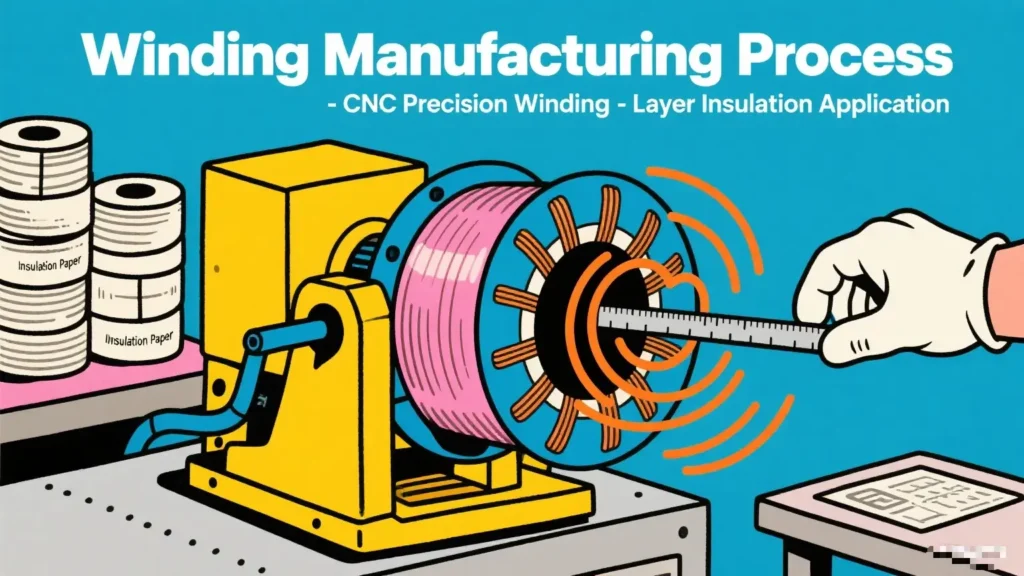
2.Winding Manufacturing
①Pretreatment: Conductors are straightened, and oxide layers are removed (aluminum wires are galvanized);
②Winding: Wound into a pancake winding, with interlayer insulation wrapped. (with an overlap rate of ≥50%), and heat dissipation gaps is leaved between the layers;
③Drying: Vacuum drying (105-110℃, 48-72h) is performed to remove moisture (≤0.5%), and the three-phase unbalance rate of DC resistance is tested to be ≤2%.
3. Prefabrication of Insulation Parts
Numerical control is used to process insulation stay bars and partition plates (with a roughness of Ra ≤1.6μm), and shielding covers are added to lead insulation tubes to prevent corona.
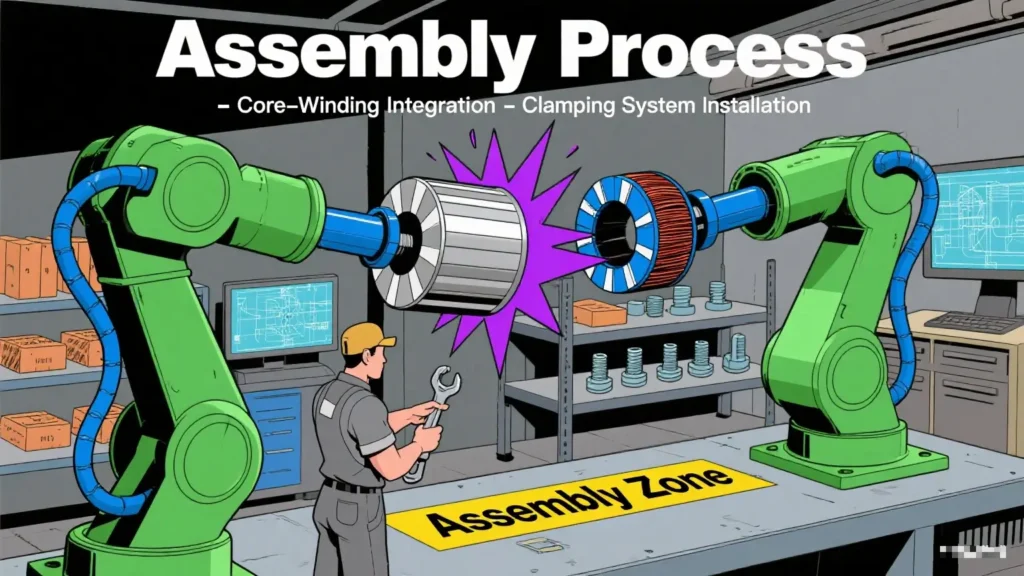
Ⅱ.General Assembly and Integration (in a Dust-Free Workshop)
1.Transformer Body Assembly
Hang the iron core into the tooling, assemble the winding (with concentricity ≤ 0.5mm), weld the lead wire (using silver brazing), clamp with insulated screws (with pre-tightening force ≥ 50kN), and install the temperature measuring element.
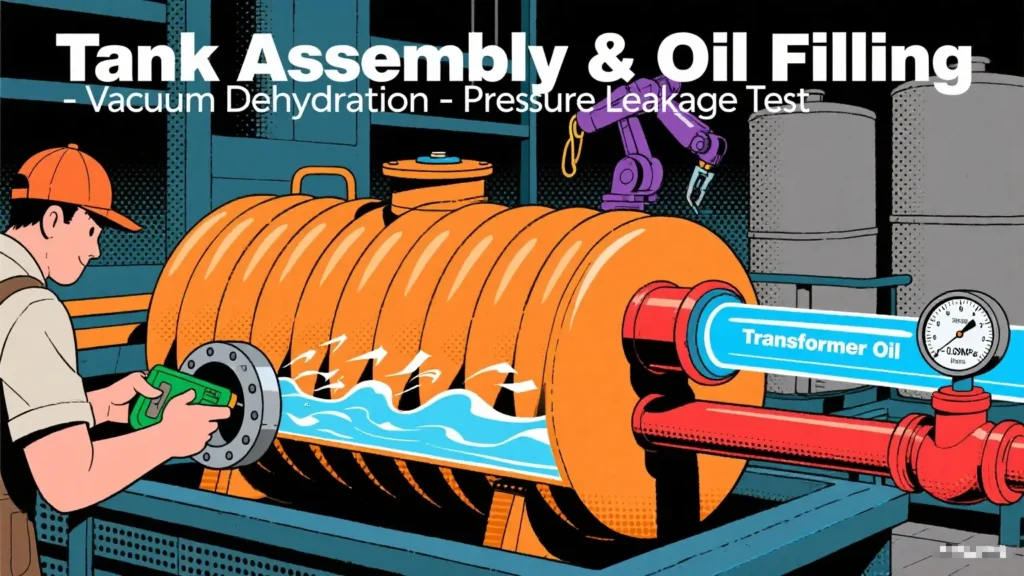
2.Vacuum Oil Filling
The transformer body undergoes secondary vacuum drying (110-120℃, 72-96h), vacuum oil filling is conducted (at a speed of ≤50L/min), and vacuum is maintained for 24h to remove gas.
3.Oil Tank Assembly
After the oil tank is welded, a water pressure test is carried out (0.03MPa, no leakage for 30min). The transformer body is placed into the tank, and bushings, radiators, etc., are installed. A vacuum leak test is performed (pressure drop ≤13Pa in 24h).
4.Accessory Installation
Accessories such as gas relays and pressure relief valves are installed to ensure sensitive operation.
Ⅲ.Testing and Inspection (Full-Item Testing)
1.Insulation Tests: Lightning impulse withstand voltage test, partial discharge test;
2.Performance Tests: No-load/load loss test, short-circuit impedance test;
3.Temperature Rise Test: Rated load temperature rise test;
4.Mechanical/Sealing Tests: Short-circuit withstand test, hot oil circulation test.
Ⅳ.Packaging and Delivery
Anti-rust paint is sprayed on the outer surface of the oil tank, the transformer body is fixed with rainproof packaging, and documents such as qualification certificates and test reports are attached for delivery.
Specification
110KV three phase three winding main power transformer
| M.V.(kv) | L.V.(kv) | Connection symbol | No-load loss(kw) | On-load loss(kw) | No-Load Current% | Short circuit impedance% |
|---|---|---|---|---|---|---|
| 36 37 38.5 |
6.3 6.6 10.5 11 |
YNyn0d11 | 9.60 | 44.00 | 0.76 | High-Middle 10.5 High-Low 18~19 Middle~Low 6.5 |
| 11.50 | 53.00 | 0.76 | ||||
| 13.6 | 62 | 0.71 | ||||
| 16.1 | 74 | 0.71 | ||||
| 19.3 | 90 | 0.67 | ||||
| 22.8 | 106 | 0.67 | ||||
| 27.0 | 126 | 0.62 | ||||
| 32.1 | 149 | 0.62 | ||||
| 38.5 | 179 | 0.58 | ||||
| 45.5 | 213 | 0.58 | ||||
| 54.1 | 256 | 0.53 |
110KV three phase two winding main power transformer
| Rated Capacity | High-Voltage Tap Range | L.V. | Connection symbol | No-load loss(kw) | On-load loss(kw) | No-Load Current% | Short circuit impedance% |
|---|---|---|---|---|---|---|---|
| 6300 | 110±2*2.5% 115±2*2.5% 121±2*2.5% |
36 37 38.5 |
YNd11 | 8.00 | 37.00 | 0.67 | 10.5 |
| 8000 | 9.60 | 44.00 | 0.67 | ||||
| 10000 | 11.2 | 52 | 0.62 | ||||
| 12500 | 13.1 | 62 | 0.62 | ||||
| 16000 | 15.6 | 76 | 0.57 | ||||
| 20000 | 18.5 | 94 | 0.57 | ||||
| 25000 | 21.9 | 110 | 0.53 | ||||
| 31500 | 25.9 | 133 | 0.53 | ||||
| 40000 | 30.8 | 155 | 0.49 | ||||
| 50000 | 36.9 | 193 | 0.49 | ||||
| 63000 | 43.6 | 232 | 0.45 |
FAQs
Ⅰ.Basic Maintenance Service
1.What are the main cooling methods of Kete 110kV oil-immersed main transformers?
The cooling methods of Kete oil-immersed 110kV main transformers can be divided into two major categories: “natural cooling” and “forced cooling”. The specific types and applicable scenarios are as follows:
①Main Cooling Methods of 110kV Oil-Immersed Main Transformers
The core cooling logic of an oil-immersed transformer is as follows: the heat generated during the transformer’s operation (iron core loss, winding loss) is first transferred to the insulating oil. Then, the heat is transferred to the tank wall/radiator through the flow of the oil, and finally dissipated into the air. The core differences between different cooling methods lie in the “oil flow power” and “air flow power”. The specific classification and characteristics are shown in the table below:
·ONAN: Oil-Immersed Natural Air Cooling
·ONAF: Oil-Immersed Forced Air Cooling
·ODAF: Oil-Directed Forced Air Cooling
②Selection Principles for Cooling Methods of 110kV Main Transformers
·Matching by Capacity:
Small capacity (≤6300kVA): Priority is given to ONAN (low cost, maintenance-free, and meets low-load requirements);
Medium capacity (8000kVA~20000kVA): Priority is given to ONAF (balances heat dissipation efficiency and maintenance costs, and is suitable for most urban/industrial scenarios);
Large capacity (≥31500kVA): Choose ODAF (for conventional outdoor scenarios) or ODWF (for special high-load/high-temperature scenarios).
·Matching by Installation Environment:
Outdoor, well-ventilated: ONAN/ONAF/ODAF (rely on air for heat dissipation and are environmentally friendly);
Indoor, narrow space: ODWF (no need for large air circulation, only requiring a cooling water interface);
·Matching by Load Characteristics
Long-term light load (e.g., rural substations): ONAN (no additional energy consumption, with reliability as the priority);
Long-term full load/large load fluctuation (e.g., industrial users, urban hub stations): ODAF (ensures stable oil temperature and avoids overload tripping).
③Summary
Among the cooling methods for 110kV oil-immersed main transformers, ONAF (Oil-Immersed Forced Air Cooling) is the most mainstream (suitable for over 80% of 110kV scenarios), followed by ONAN (for small capacity) and ODAF (for large capacity).
2.What aspects should be paid attention to in the daily maintenance of Kete oil-immersed main transformers?
Centered on the core principles of “Safe Operation, Early Warning, and Rapid Response,” the focus is placed on four key dimensions:
①Real-Time Operation Monitoring (3 Core Parameter Categories)
·Temperature: The top-layer oil temperature shall be ≤ 85℃ (≤ 95℃ for short periods), and the winding temperature rise shall be ≤ 55K; the cooling system (fans/pumps) shall switch on and off automatically without jamming.
·Oil Level and Oil Quality: The oil level shall change normally with oil temperature, and the oil color shall be pale yellow and transparent; if the oil level is abnormal (too high/too low), check for leaks; if the oil is turbid/bubbling, send it for inspection immediately.
·Electrical Parameters and Sound: The three-phase current shall be balanced (unbalance degree ≤ 10%), and the voltage shall be ≤ 1.05 times the rated value; the normal sound shall be a uniform “hum”; if abnormal noise occurs, shut down the equipment immediately.
②Regular Testing (Key Items)
·Oil Quality Testing: Cycle: 3-6 months; Qualification standard: Dielectric strength ≥ 35kV, no C₂H₂ (no arc discharge).
·Insulation Resistance: Cycle: 1 year; Qualification standard: Insulation resistance not lower than 70% of the initial value, absorption ratio ≥ 1.3.
·DC Resistance: Cycle: 1 year; Qualification standard: In-phase unbalance degree ≤ 2%, phase-to-phase unbalance degree ≤ 4%.
·Iron Core Grounding: Cycle: 1 year; Qualification standard: Grounding current ≤ 100mA.
·Bushings/Cooling System: Cycle: 1 year (for bushings) / 3 months (for cooling system); Qualification standard: No hot spots on bushings, normal start-stop of fans/pumps.
③Abnormal Situation Handling (3 Common Scenarios)
·Sudden Rise in Oil Temperature: First, check the load and cooling system; if no abnormalities are found, shut down the equipment to inspect for internal faults (e.g., winding short circuit).
·Abnormal Oil Level: If the oil level is low, check for leaks and replenish with qualified oil; if the oil level is high, check the breather and then conduct oil chromatography analysis.
·Gas Relay Operation: For light gas action, check the gas color and conduct chromatography analysis; for heavy gas action (tripping), do not force power transmission and conduct a thorough inspection.
④Safety Protection
·Equip with carbon dioxide/dry powder fire extinguishers (water is prohibited), ensure a fire safety distance of ≥ 15m, and keep the fire-fighting system in good condition.
·Ensure reliable grounding of the enclosure/iron core, etc. (grounding resistance ≤ 4Ω), and wear insulating equipment during patrol inspections.
·Provide rain protection for outdoor equipment and ensure ventilation for indoor equipment (indoor temperature ≤ 40℃, humidity ≤ 80%).
3.How to select different types of 110kV main transformers based on climatic conditions and pollution conditions?
①Climatic conditions:
·In hot and humid areas, “moisture-proof radiators” shall be selected, and the oil tank sealing shall be enhanced.
·In extremely cold areas, oil temperature heating devices (such as electric heating rods) shall be equipped to prevent oil solidification or deterioration of insulating oil fluidity.
②Pollution level:
In industrial zones and coastal areas, “anti-pollution bushings” (such as silicone rubber bushings) shall be adopted, and the creepage distance of bushings shall be increased (e.g., the creepage distance in grade IV pollution areas shall be ≥ 31mm/kV) to avoid creepage breakdown.
4.Which components of a 110kV oil-immersed on-load tap-changing main transformer can be customized?
①Iron Core: Select high-magnetic-conductivity silicon steel sheet models based on loss and cost requirements. The clamping structure can be optimized to enhance stability and short-circuit resistance.
②Winding: The conductor material can be copper wire (including oxygen-free copper, etc.), and the structure can be customized to balance performance and loss.
③Voltage Regulating Switch: Different brands and models (such as imported MR switches) are available, with adjustable gears and precision customizable; the operating mechanism can be manual or electric, and the electric type can be equipped with remote control.
④Oil Tank: The structure can be chosen as bell-jar type (easy for maintenance) or barrel type (excellent sealing performance); high-quality steel plates are used as the material, and the surface can be customized with anti-corrosion treatment (such as three-bottom and one-top coating, hot-dip galvanizing).
⑤Insulating Bushing: Select types (such as pure ceramic, oil-filled ceramic, etc.) based on voltage, current, and environment, and customize the size and shape to fit the installation and wiring.
⑥Cooling Device: The cooling method can be oil-immersed self-cooling/air cooling, forced oil circulation air cooling/water cooling; for air cooling, the number and power of fans can be customized, and for forced oil circulation, the specifications of oil pumps and oil flow relays can be customized.
⑦Protection Device: The type and quantity of protection devices (such as gas relays, pressure relief valves, etc.) can be customized, and temperature alarm and trip functions for oil and windings can be added; the monitoring and control system can be mechanical or intelligent, and the intelligent type supports real-time monitoring and remote control.
Ⅱ.After-sales maintenance
1.What is included in Kete's warranty coverage during the warranty period? And how are the costs borne?
Our company’s warranty coverage includes performance failures caused by material defects or manufacturing process issues, such as cabinet water leakage, insulation failure, abnormal switch operation, etc.
We provide spare parts for maintenance free of charge, and will dispatch technical personnel for on-site inspection and repair if necessary, with travel expenses borne by the supplier.
2.Will Kete provide guidance documents for installation?
For large transformers that require the removal of some accessories to fit into containers, we will provide an installation video and an electronic version of the installation instructions.
3.If maintenance is required and spare parts are purchased from Kete, how long will it take for the spare parts to arrive?
If the customer needs to purchase spare parts from our company, the goods can generally be shipped within 2-7 days.
4.How to handle emergency maintenance requests, and what is the typical response time?
24/7 technical support hotline, ensuring a fault time of ≤ 2 hours.
5.What kind of after-sales support can Kete provide, including troubleshooting and maintenance services?
During the warranty period, regular return visits (once every 3 months) will be conducted to provide operation status testing and maintenance recommendations.
After the warranty period expires, lifelong maintenance services at cost price and spare parts supply can be provided.
6.Can Kete provide options for service contracts or extended warranty periods?
Yes, we can. Generally, the warranty period for our products is one year. If an extension of the warranty period is required, we will increase the price by a certain profit margin based on the existing price accordingly.
Ⅲ.Delivery and Payment
1.What is the manufacturing and delivery lead time for Kete oil-immersed transformers?
Generally speaking, if the customer provides detailed design drawings and specification requirements, transformers below 2500KVA can be completed within approximately 20 days; transformers above 2500KVA usually take about 30 to 40 days. The specific lead time depends on the complexity of the transformer.
2.What is the packaging for Kete oil-immersed transformers?
For bulk cargo, we will use wooden cases for packaging; for full containers, we will use wooden pallets to reinforce the packaging.
If you have legally registered patent, we can pack the goods in your branded boxes after getting your authorization letters.
3.What are the payment terms for Kete transformers?
①T/T 30% as deposit, and 70% before delivery.
②LC at sight
③DP at sight
4.What are the delivery terms for the bulk shipment of Kete transformers?
EXW, FOB, CFR, CIF or some other delivery terms inquired by customers.
Ⅳ.Systems and Certifications
1.Does the design of Kete oil-immersed transformers comply with specific industry standards and certifications?
Kete Oil-Immersed Transformers Meet Various International Standards, National Standards, and Core Certification Systems
①General Standards: IEC 60076, GB 1094
②Key Certification Systems
·Chinese Certifications: CCC Certification, ISO System Certification
·EU Certification: CE Certification
·US Certification: UL Certification
·Canadian Certification: GSA Certification
·Russian Certification: Gost Certification
·African Certification: COC Certification
Why Choose us ?
Built to last, engineered to perform.
Kete Transformer is a key national-level manufacturer specializing in transformers, recognized as a “Contract-Honoring and Promise-Keeping” enterprise, a high-tech enterprise, and a national-level enterprise technology center. It is recommended in the national directory for rural and urban power grid construction and renovation, as well as a recommended supplier of major electromechanical equipment for hydropower projects. Its products have been awarded the title of “National Quality Inspection Qualified Product – Quality Trustworthy Product” and “Nationally Recognized Product for Mechanical Industry Users.
Our Project
Our products not only dominate the domestic market but are also exported to more than 30 countries and regions, including Russia, Southeast Asia, Africa, and the Americas, serving industries such as power, municipal engineering, metallurgy, and petrochemicals.